Tag: EconomicStability

Key Highlights of the Global Trade Report

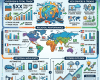
Infographic showing global trade highlights, regional export/import trends, sectoral growth, and future projections.

World merchandise trade grew 4.6% in 2025, beating the 2.4% forecast, as demand for AI-related goods offset tariff uncertainty and policy risks. Asia drove 71% of that growth, supported by resilient emerging-market demand, expansionary policies, and North American frontloading ahead of US “reciprocal” tariffs. Pre-conflict projections had 2026 merchandise trade growth slowing to 1.9% and global GDP at 2.8%. However, the Middle East conflict has curtailed Persian Gulf oil shipments, which account for 20% of global liquid petroleum use, pushing crude to ∼$90/barrel and LNG to ∼$16/MMBtu. If prices stay high, merchandise trade growth may drop to 1.4% and GDP to 2.5% in 2026.

Rate this:

The Erosion of Value: A Macroeconomic Analysis of Inflation

Modern economies operate on fiat currency, which is legal tender not backed by a physical commodity like gold or silver but by the government that issued it. Because fiat money lacks intrinsic value, its primary distinction is not stability, but the varying velocity of its depreciation. To gain an objective understanding of value, economists often look to hard assets or a basket of goods (a representative sampling of consumer products).

Rate this:

Stabilizing Purchasing Power of Common Medium of Exchange 

The rate of return for most non-agricultural activities will fall to naught, while the rate of return for farming will soar high. The organized sector, assisted by interest-driven financing, keeps prices of its products and services high by controlling production and employment. Due to the confusion created by the illusion of consistently rising prices, commoners fail to respond effectively.

Rate this:

Theoretical and Analytical Approach of Financial Stability: Islamic Perspective

Financial crises are often linked to unsustainable booms in financial and business cycles. Research shows that credit and house price cycles are closely tied to output cycles. From an Islamic perspective, synchronizing financial and business cycles can promote stability. A Shari’ah-compliant system without interest rates can align the financial cycle with the real economy, bolstering stability.

Rate this: