Moral Reflections on Economics, Vol 5, Issue 12

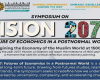
December 2025 issue (Vol 5, Issue 12) of Moral Reflections on Economics features: “The Dual Structure of Islamic Economics: Economics of Religion and Religious Economics” by Assoc. Prof. Dr. Mohd Nahar Mohd Arshad, Department of Economics, KENMS, IIUM;
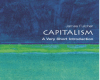
“Stabilizing Purchasing Power of Common Medium of Exchange”  by Hifz Ur Rab; Highlights of Islamic Finance Development Report by Hammad; Book review of “Capitalism: A Very Brief Introduction” by James Fulcher reviewed by Aisha Wani; Research paper in focus on “Utility Maximization, Morality, and Religion” by Dr. Jonathan E. Leightner and regular sections of reflections, market news, economic and financial indicators and call for papers.

Download at: https://islamiceconomicsproject.com/periodicals/

Rate this:

Utility Maximization, Morality, and Religion

The paper contrasts this self-centred economic model with moral philosophy. Egalitarian ethical theories which include Utilitarianism, Rawls’s theory of justice, Situation Ethics (Joseph Fletcher), and Kantian ethics (Categorical Imperative), all require that, as a necessary condition for morality, one must treat the welfare of others the same as or equally to one’s own welfare.

Rate this:

Capitalism: A Very Brief Introduction

Capitalism is defined by the Cambridge dictionary as, ‘An economic and political system in which property, business, and industry are controlled by private owners rather than by the state, with the purpose of making a profit.’ Following this definition, not every country can be considered ‘capitalist’.

Rate this:

Key Highlights of Islamic Finance Development Report 2025

The 2025 Islamic Finance Development Indicator (IFDI) assessed 140 countries, with the global average score declining to 11 due to new entrants scoring low in most indicators. The top 10 countries remained unchanged, led by Malaysia and the UAE, which excelled across all five indicators. Notable shifts include Bangladesh dropping out of the top 10 due to Islamic banking sector challenges, while Tanzania showed promise with Sukuk issuance and sector growth.

Rate this:

Stabilizing Purchasing Power of Common Medium of Exchange 

The rate of return for most non-agricultural activities will fall to naught, while the rate of return for farming will soar high. The organized sector, assisted by interest-driven financing, keeps prices of its products and services high by controlling production and employment. Due to the confusion created by the illusion of consistently rising prices, commoners fail to respond effectively.

Rate this:

The Dual Structure of Islamic Economics: Economics of Religion and Religious Economics

Islamic economics is fundamentally a normative field, dedicated to the in-depth study of the normative principles outlined in the Qur’an and the Sunna (religious economics). In its empirical research, it probes into the economic behaviours and values of Muslims. As a result, it extensively utilizes economic tools to comprehend Muslim behaviour, integrating the economics of religion as one method of exploration.  In reconciling normative (what should be) and positive (what is) economics, the discipline also emphasizes facilitating the transition from the current state to an ideal one, aiming to transform ‘what is’ into ‘what should be’. This agenda is central to Islamic economics, as it is to religious economics.

Rate this:

The Financial Crisis and the Systemic Failure of Academic Economics. Lessons from the Financial Crisis: Causes, Consequences, and Our Economic Future

The authors note that the instability leading to crisis is assumed away by the models which assume inherent stability. Economists are confined to models of stable states that are perturbed by limited external shocks. Economists failed to incorporate the intrinsic recurrent boom-and-bust dynamics characteristic of a complex economic system. Consequently, ‘systemic crisis’ is treated as an ‘otherworldly event’ absent from theoretical frameworks.

Rate this:

Methodology of Economics: Secular Versus Islamic

The author asserts that Islamic economics is currently the result of applying Islamic rules and injunctions (Fiqh) to the secular economic framework, and is not yet a separate discipline that fully replaces secular economics. The author notes that methodology is a messy and confusing area in both fields. He highlights that in Islamic economics, it is often wrongly treated as a research design or work plan. The author explains that economics is usually called ‘science’ and is seen to be built for achieving its objectives on some perception of rationality. Methodology is the ‘theory of theories’; in the field of economics it refers to the “process economists use to authenticate the knowledge about economic phenomena”.

Rate this:

Key Highlights of World Social Report 2025

The report calls for a new policy consensus based on equity, economic security for all, and solidarity. It emphasizes the need for structural transformations in policy, institutions, norms, and mind-sets, and a fundamental reorientation of policymaking through a social lens. A new consensus must prioritize strong social policies, investments in public institutions, and a people-centred approach to development, moving beyond the current over-reliance on markets.

Rate this:

Foundational Problem with System of Interest

Efficiency is the name of conforming to laws of nature. Ideal performance of interest driven system requires the investment to produce nearly same rate of return so that interest rate may be considered a means of sharing of profit between financier and entrepreneurs and investment may not suffer adversely, but that being grossly contrary to nature, the system is inefficient. 

Rate this: