Tag: Riba Free Finance

Beyond Prohibitions: Unveiling the Hidden Dynamics of Islamic Economics and Finance

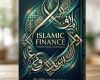
Book titled Islamic Finance Principles Practice and Innovation by Dr. Abdullah Al-Hassan with intricate gold and teal Islamic design

This research paper provides a theoretical reframing of the objectives underlying Islamic economics and finance. While Islamic finance is largely known for avoiding specific prohibitions—such as Riba (interest), Gharar (excessive ambiguity), and Maysir (gambling)—critics argue that it has become operationally identical to conventional finance. The author argues against this phenomenon of ‘Shariah arbitrage’, where the outward form is Islamic but the substance remains conventional.


Rate this:

Key Highlights of IFSB Report 2024

Islamic banking continues to be the largest segment of the IFSI, constituting 70.21% of the total global IFSI assets in 2023, while Sukuk outstanding and Islamic funds collectively represented 29.08%, and the Islamic insurance segment represented 0.71%. The regional distribution of global Islamic finance assets reveals a pronounced concentration in the Gulf Cooperation Council (GCC), which accounts for 52.50%.

Rate this:

IEP Forum on FSC Verdict on Riba – Experts View – Prof. Tariqullah Khan

Islamic Economics Project is making a humble effort to collect the views of Shari’ah scholars, regulators, practitioners, lawyers and academic experts to deliberate on the future course of action and generate ideas and debate on how to make this transformation possible. We got the chance to get reaction and response from Prof. Tariqullah Khan. we got the chance to get reaction and response from Prof. Tariqullah Khan, who is also the recipient of Islamic Development Bank Laureate Award for his work in Islamic economics and circular economy in 2022. We hope that the views expressed and shared with relevant audience and stakeholders will generate practicable ideas and keep the momentum towards achieving the end goal of an economy that is in compliance with Shari’ah and is able to utilize the instruments and institutions in the Islamic economic teachings.

Rate this: