

Salman Ahmed Shaikh
Hajj is an important ‘Ibadah’ in Islam. It is compulsory for every Muslim (male and female) to perform Hajj once in a life if one can afford it and is able to travel to the place physically.
Below, we look at the social and cultural importance of Hajj and what implications it has at an individual level and how it shapes societal behavior and actions.
Hajj is a special ‘Ibadah’ in Islam. It simultaneously contains an element of other important ‘Ibadah’ in Islam, like Jihad and fasting.
In Jihad, one is contributing with one’s physical capabilities and money to fight against evil in the way of Allah. It involves a travel away from home and sacrifice of one’s wealth and even life. In Hajj too, one travels away from family to meet Allah and exhibits one’s determination to surrender before Allah.
Just like in fasting, in Hajj too, one refrains from certain allowable activities for the time being in order to fulfil Allah’s commands. By this resentment, one is reinvigorating the pledge with Allah to follow His commands consistently.
Some people argue that why Muslims go for Hajj even though, they could use the money for charity and social causes.
First, Hajj is a compulsory Ibadah once in life only on those who are physically fit to travel and who have the resources to make that journey from their own funds rather than the borrowed funds.
Major expenses include airline ticket, accommodation, and food and travel within the cities.
All of these services are provided by firms. The revenues they get from providing these services opens an income source to the labourers and other factors of production.
In national income accounting, income and expenditure are two sides of the same coin. Someone’s expenditure is someone else’s income.
When people spend on buying shoes and garments, it enables the workers to get wage, outlet owner to get rent, investors to get return and entrepreneur to get profit which he would either spend or reinvest.
But, there are other aspects of Hajj also in terms of fostering cooperation, harmony and love among people.
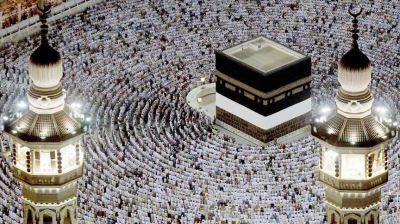
From the social point of view, thousands of people come for Hajj from all over the world having different races, colour, belonging to different countries and speaking different languages. They all come to perform Hajj and follow the rituals in the same manner to exhibit that there is no difference in Islam between human beings on the basis of wealth, race, creed, language and region.
From the viewpoint of culture, Hajj brings together people of different cultures together. It brings increased understanding about different cultures and unites people by ensuring mutual respect and harmony.
It expands people’s vision and makes them accommodate and leave their biases first at the holy place and then this mutual harmony is perpetuated after one experiences life away from worldly affairs, wearing un-stitched clothes, using no means of adornment and beautification and embracing one’s true identity as the creature of Allah.
All the people, despite their diverse demographic attributes, wear the same un-stitched clothes, come together at one place, and follow the same rituals and exhibit unity and discipline.
This feeling and understanding compels people to leave their pride and biases. It makes them believe that they are servant of Allah just like everyone else.
Categories: General Issues About Islam
 Islamic Economics Project
You are doing a great job! Recently, I have read about Hajj Umrah and Ziyarah (https://bit.ly/3AdUWhM) which is a pocket-size book. I always want to collaborate with local people and would do so on the occasion of Hajj as well. However, the book suggests we pay attention to the steps and requirements of HAJJ instead of wasting time on worldly activities. What do you suggest about it?
LikeLike
What is 1. Spiritual objective of Hajj? 2. Social value of Hajj and 3. Moral objective of Hajj?
LikeLike
It is explained in the article. Objective is God consciousness and reminder that we are all creatures of Allah and that we shall abide by the ethical and moral principles given by our Creator and do away with pride, injustices and inequities like we live during the Hajj days with simplicity, unity and humbleness.
LikeLike
The fifth pillar of the Islamic faith is the Hajj or pilgrimage to the holy city of Mecca. This ritual is incumbent upon all able-bodied men and women with the economic means to safely travel to Mecca. If they meet this standard, then they have to perform the Pilgrimage at least once in their lifetimes.
LikeLike