

Dr. Atiq ur Rehman
Associate Professor, AJK University
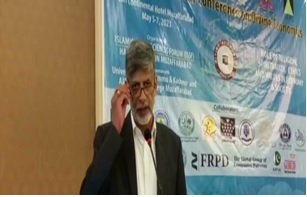
Contemporary economics is based on the idea that every decision maker makes his economic decision on the basis of his or her own utility. This theory is presented not only to describe the existing human behavior, but also as a preferred human behavior.
According to classical economics, if everyone chooses to maximize his or her utility, then the welfare of the society will be maximized. Therefore, keeping an eye on your own advantage is termed as rationality and is promoted as a preferred human behavior that can bring the optimal economic outcomes for the society.
There are several arguments to support this utility maximization theory. For example, it is said that if every consumer in the market is deciding on the basis of his utility gains, then no supplier in the market would be able to charge extra price, because in this case the customer may switch to another supplier and the supplier will not want to lose his customer.
Therefore, the so called rationality asks the supplier not to demand extra money for what he supplies. On the basis of this, the utility maximization is often taught as a preferred economic behavior.
It is true that sometimes utility maximization can bring optimal economic outcomes but this needs certain conditions under which this mechanism can work. You must have the freedom to choose your business client, the information about market must be available to everyone and no one should have extraordinary influence in the market.
Under these conditions, utility maximization can bring optimal outcomes for the individuals but there is no guarantee to have optimal outcomes for the society nonetheless.
On the other hand, if these conditions are not met, the utilitarianism can happen to be very harmful for the society. For example, the famine of Bengal in 1945 took many million lives due to shortage of food.
At the time of this famine, millions of people were starving to death. This is despite the fact that they were producing enough grain not only for domestic needs but also for exports.
The Japan and its allies from the East had conquered Singapore and Burma, blocking the supply of rice from the East for the British army. The British in desperation started collecting food for their soldiers in western areas. They purchased rice from Bengal and started supplying to western regiments deputed in different parts of the United India.
Because the British had a lot of money, they were able to purchase grains at any price. The price of rice went up in Bengal, but the locals did not have enough money to purchase the grains for survival. Therefore, millions of poor Bengalis suffered a tragic death. This kind of event can occur if there is any one influential party in the market who has the power to disrupt the free market.
Putting aside the discussion on free market, there are some questions about the definition of rationality. Many people believing in religion also consider life after death in making their decisions. We know that more than 90% people of the world are associated with one or another religion.
If someone is making charity because he believes in the life after death where he will get reward of his charity, should it be considered rational or not?
Contemporary economics considers rationality only in the context of this world without any regard to the life after death. Nonetheless, more than 90% of the people in the world are associated with any of the different religions and in most divine religions, there is concept of afterlife.
The common definition of rationality would not describe their behavior as rational. This would be a violation of the basic assumption that economic agents are rational.
Prof. Dr. Syed Nisar Hamdani had been a Professor at the Kashmir Institute of Economics, University of Azad Jammu and Kashmir. He has quite different views about the definition of rationality.
According to Prof. Hamdani, considering the life after death in economic decision making is also completely rational because the decision maker is expecting a reward in the life after death. If the view of Prof. Hamdani is taken into account, the nature of economic decisions would change drastically.
Prof. Hamdani also discusses the concept of individual who maximizes his utility. In the contemporary economics, individual is a human or an institution who makes decision in order to maximize the benefit for self or for the institution. But in reality, everyone thinks about his own life as well as for his family. If the individual is more responsible, he will also consider the advantage for his community, country and globe.
Widening the circle of those you care about will change the nature of decision. If someone is maximizing the utility for his own personality, then installing a factory producing hundreds of tons of toxic gases would be an optimal decision if it can make money for the investor.
On the other hand, if someone is taking into account welfare of his community, society and the future generations, then such decision would not be considered as a good decision.
Prof. Hamdani terms his interventions in economic theory as Divine Economics. His idea got a lot of popularity and has been admired by several top economists at top universities of the world including the experts at Harvard University and London School of Economics and Political Science.
The shortcoming in conventional economics that Prof. Hamdani has pointed out are also realized by the world as well. There was a time when increasing GDP was the only measure of development. However, now the definition of development is transformed into the Sustainable Development Goals (SDGs).
The sustainable development goals are the goals set by the world leaders to achieve. The sustainable development goals include many of the targets which are related to community, country, society and the world at large.
However, what are the theoretical foundations of pursuing the sustainable development goals. Mainstream economics which focuses on individual level utility maximization cannot provide a sensible answer to this question. Divine economics can provide theoretical foundations for the SDGs.
According to Prof. Hamdani, conventional economics is not a good description of the human behavior as more than 90% of the individuals in the world follow one or another religion and the religion often affects the economic decisions.
For example, suppose pork and chicken have same nutrition value and the chicken is sold for PKR 500 per kg, but the pork is available for PKR 200 per kg only. Economic theory would suggest to purchase pork because it can save money, but a Muslim consumer will prefer chicken over pork even though it is causing loss of money.
Mainstream economics would see purchasing chicken as irrational, but the divine economics considers it as a normal behavior. Divine economics considers this decision as rational because individuals consider the divine guidance provided by the religion as an integral part of their decision making.
Now when the SDGs have become the talk of the town, divine economics can actually help in achieving the SDGs. This is because conventional economics does not provide theoretical foundations for the SDGs, but the divine economics can provide such foundations. Divine economics gives proper weightage to religions and every divine religion asks to care about humanity along with one’s own personality.
Given the above mentioned facts, you can like or dislike divine economics, but it is not possible to reject the fundamental logic of this newly designed framework, because no one can deny the role of religion in economic decision making.
However, a question arises that we can cover all these things under the discussion of Islamic economics instead of divine economics; then, why is it necessary to use the term divine economics instead of Islamic economics?
According to Prof. Hamdani, divine economics framework is applicable for entire humanity having affiliation with any religion. It is also true that every religion is having its own guidance for the economic decision making, and there is an opportunity to generalize the framework for all religions.
However, many Muslim economists working in Islamic economics think that such a generalized approach is not necessary and it may dilute the salience of teachings and contributions of Islamic sources of knowledge in a generalized framework. Having said that, it is heartening to see that a genuinely unique and novel contribution is made in the field of economics from Azad Jammu and Kashmir by Prof. Hamdani and this work has the potential to make economics more robust, reality-based and inclusive of values and ethics.
Categories: Articles on Islamic Economics
 Islamic Economics Project