

| Muhammad Mumtaz Ali |
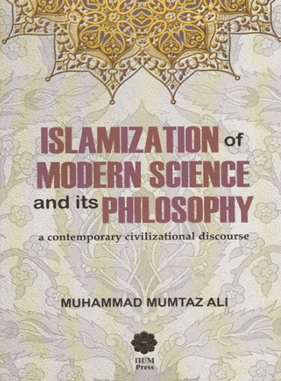
In ‘Islamization of Modern Science and Its Philosophy’, Prof. Dr. Muhammad Mumtaz Ali provides a critical evaluation of Western science and argues for a reconstruction of knowledge rooted in the Islamic worldview (Tawhid). He posits that science is never neutral and carries the cultural and philosophical DNA of its creators.
The author introduces the foundational necessity for Islamizing knowledge. He argues that modern secular science is built on a God-less paradigm that separates the physical world from the spiritual reality. Islamization is not just about adding Halal labels to science, but a total epistemological overhaul to align human discovery with Divine Revelation.
The author critiques the claim that science is objective and value-free. He explains that modern science is driven by Western secularism, materialism, and positivism. He argues that Muslims cannot simply borrow Western technology without also importing the underlying philosophy, which often contradicts Islamic values like stewardship (Khilafah) and moral accountability.
The book deconstructs the methodology of modern science. It acknowledges the empirical success but highlights its limitations. Modern science only addresses the how (mechanism) and ignores the why (purpose). By restricting reality to what can be measured in a lab, modern science ignores the metaphysical realm, leading to a fragmented understanding of existence.
The book also explores the historical tension between the Church and science in Europe, which led to the total separation of religion and the state. The author argues that because Islam never had a ‘Dark Age’ conflict between faith and reason (as seen in the Islamic Golden Age), the Western secular model of science is a solution to a problem that never existed in the Muslim world.
The book also analyzes the contributions of Prof. Dr. Syed Muhammad Naquib al-Attas, one of the pioneers of the Islamization movement. He focused on ‘de-westernization’—the process of identifying and removing Western cultural and philosophical assumptions from current sciences before they can be reintegrated into an Islamic framework.
The book also discusses the work plan of Prof. Dr. Ismail al-Faruqi, who founded the International Institute of Islamic Thought (IIIT). The author details Prof. Al-Faruqi’s ‘Work Plan’, which consists of five objectives and twelve steps to reform the social and natural sciences. The emphasis here is on mastering the modern disciplines while simultaneously mastering the Islamic legacy wit the end objective to come up with new curriculum.
The author explains that Tawhid (the Oneness of God) is the unifying principle of all knowledge. In an Islamic philosophy of science, there is no divide between the natural and supernatural. All laws of nature are seen as the ‘Sunnah of Allah’, making the study of science a form of worship (Ibadah) and Zikr.
The author tackles the ‘how-to’ of the process. He discusses the sources of knowledge in Islam which include:
- Revelation (Wahyi): The absolute truth.
- Reason (Aql): The tool for understanding the world.
- Senses (Hawas): The tools for empirical observation. He argues that science must be guided by Revelation to ensure it serves humanity rather than destroying it.
The author addresses the critics of the Islamization movement—both secularists who think religion has no place in science, and traditionalist Muslims who think science is inherently Western and should be ignored. He responds by clarifying that Islamization is a call for intellectual excellence, not a retreat from rigorous scientific inquiry.
The final chapter looks toward the future. The author summarizes that the goal of Islamizing science. The new vision seeks to solve global crises (environmental, moral, and social) by reconnecting scientific progress with ethical boundaries and the recognition of a Creator. The central thesis of the book is that for the Muslim world to truly progress, it must develop a scientific framework where the lab and the mosque occupy the same intellectual universe, guided by the ethical and ontological principles of the Qur’an.
However, there is a need to go beyond presenting a manifesto of identity politics and a rigorous philosophy of science. As the author notes that there is a tremendous contribution of Muslims in the scientific literature especially in the middle ages. Perhaps, there is no need to overemphasize the binary oppositions— ‘Western’ vs. ‘Islamic’ science. Even within West, many scientists had believed in God. There are more than a dozen Nobel Laureates in science who believe in God. The opposing camp that has apprehension about religion is not the whole of ‘West’, but a sub-group of atheists who confound scientific discourse with their atheistic opinions.
While culture does have an impact on how science is used for technological developments and for what ends, there is no need to overly criticize the universality of scientific phenomena. The laws of thermodynamics or the structure of DNA do not change based on the researcher’s religion. Scientific results are verifiable regardless of geographic or theological origin. By labeling science as ‘Western’ if not ‘Islamic’, it seems to convey to the others that we are delegitimizing the value of empirical facts.
More fundamental changes are required both in the methodology and the content to claim grounds for a new science. It is rather apt to call for reforms in science than to be having an antagonistic view to the current body of established science, which is developed by the Muslims, Christians and Jews together since the last one millennium or so.
While the proliferation of weapons and environmental degradation are real problems, it is better not to use them as a precursor for a category error, i.e. confusing technology/policy (how science is used) with science (the study of the natural world). While the critique of the misuse of technology is valid, the attempt to Islamize the fundamental laws of nature is rather not necessary.
Categories: Articles on Islamic Economics
 Islamic Economics Project