Tag: IslamicScholarship

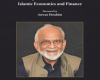
Muhammad Nejatullah Siddiqi

The book discusses the vast contributions of Dr. Muhammad Nejatullah Siddiqi in disciplines like economics, finance, Islamization, Maqasid-e-Shar’iah and contemporary socio-political and economic issues. As one of the chief contributors in Islamic economics, Dr. Nejatullah Siddiqi firmly believed that Islamization, or the acquisition of knowledge, should not be pursued for the sake of gaining power and authority. Instead, the creation, acquisition, and utilization of knowledge are fundamentally intended for the betterment of humanity. Its goal is not the universal domination of Muslims, but rather the overall welfare of humanity as a whole.

Rate this:

Mufti Taqi Usmani’s Fatwa on Cryptocurrency

Text: CRYPTO Cryptocurrency

This note does not seek to examine the various juristic definitions of māl. Rather, it argues that merely describing cryptocurrencies as digital numbers or ledger entries does not seem sufficient to exclude them from the category of māl. The same description applies to modern banking, electronic money, and numerous forms of intangible financial rights. In fact, what we call fiat currencies—such as the Pakistani Rupee or the US Dollar—have themselves largely become ledger entries. The balances held in bank accounts (including those of Islamic banks) are, in reality, digital records.

Rate this:

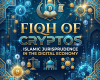
Fiqh of Cryptos – Part 1 and Part 2

Islamic jurisprudence and cryptocurrency symbols with digital economy elements

The most common objection to crypto assets in Shar’iah discussions is not about risk. It is not about volatility either. It is more basic than that. The objection says there is no ‘thing’ here to judge in the first place. A crypto asset, based on this view, is not property that happens to be risky. It is not property at all. It does not exist. It is only an imaginary or a fictional number in a database, created by a computation. And numbers in a database are not wealth or assets (mal).
If this premise is correct, every later question is already settled. Is a crypto asset property (mal)? Does it carry financial or economic value (maliyyah) in the Shar’iah sense? Is it a form of wealth Shar’iah recognizes (mutaqawwam)? None of these questions need to be asked if the object itself does not exist. This series of articles explores these questions in depth.

Rate this:

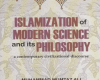
Islamization of Modern Science and Its Philosophy

The book deconstructs the methodology of modern science. It acknowledges the empirical success but highlights its limitations. Modern science only addresses the how (mechanism) and ignores the why (purpose). By restricting reality to what can be measured in a lab, modern science ignores the metaphysical realm, leading to a fragmented understanding of existence. The book also explores the historical tension between the Church and science in Europe, which led to the total separation of religion and the state. The author argues that because Islam never had a ‘Dark Age’ conflict between faith and reason (as seen in the Islamic Golden Age), the Western secular model of science is a solution to a problem that never existed in the Muslim world.

Rate this:

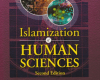
Islamization of Human Sciences

The primary goal of the book is to provide a conceptual framework and work-plan for the Islamization of Knowledge (IOK) specifically within the human sciences. It addresses the educational dilemma faced by Muslims due to the prevalence of secular Western models of thought, aiming to produce a re-integration of Islamic perspectives across all academic disciplines. The book is structured into several chapters that analyse both general theories of knowledge and specific applications in social sciences.

Rate this:

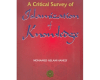
A Critical Survey of Islamization of Knowledge

The book is a succinct summary of the major thoughts in Islamization of knowledge and the noted author provides a clear demonstration of ideas and how they contrast with each other. An equally useful contribution of the book is the illustration of the different views in flowchart diagram to ease understanding through illustrations. Finally, the book also contains abstracts of seminal works together with a useful and relevant bibliography for interested readers.

Rate this:

Kitab al-Isharah ila Mahasin at-Tijarah

Author explained the problem of double coincidence of wants in the barter trade. He wrote that even if the wants coincide, there may be disagreement on the counter values in exchange. Without divisibility of the good, the barter economy runs into barriers to trade. He also wrote on prudence in economic management. He emphasized the need for proactive procurement and infrastructure investments to ensure smooth supply chain, production process and market stability. He favoured procurement from the original nearby source to avoid intermediation mark-up and make purchases when the market has adequate supply and availability so as to avoid cost-push inflation.

Rate this: