

| Title: Meesaq-e-Umrani [Social Contract] Author: Prof. Ghazi Ilm uddin Publisher: National Book Foundation |
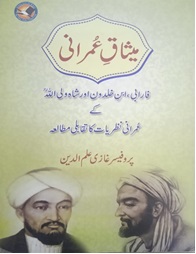
Author first explains the basic ideas of three key Western philosophers on social contract. Thomas Hobbes (1588 – 1679) said that people create a contract by coming together in peace, agreeing to a set of laws, and creating a “sovereign”. The contract is made among the people to protect themselves from one another.
John Locke (1632 – 1,704) said that human beings have inalienable rights. He used a theory of natural rights to argue that governments have obligations to their citizens, have only limited powers over their citizens, and can ultimately be overthrown by citizens under certain circumstances.
Hobbes believed that a social contract was necessary to protect people from their own worst instincts. On the other hand, Locke believed that a social contract was necessary to protect people’s natural rights. Locke believed that if government did not protect people’s rights, they could reject it.
Rousseau (1712 – 1778) stated that society exists by the consent of the people, and acts by popular will. He said that government attains its right to exist and to govern by “the consent of the governed.” Thus, Hobbes theory of social contract supports absolute sovereign without giving any value to individuals, while Locke and Rousseau supports individual than the state or the government.
Then, the author presents the Islamic perspective on society building and politics. Islam has a distinct worldview centered on the idea of monotheism and afterlife accountability. Thus, due to natural reasons, such as defence, organization, cooperation and peace, human beings will organize themselves in society and build social institutions.
However, the governing law shall be divine law and the ruler shall also be bound by the divine law. Thus, absolute power does not rest with individuals. Islamic law is conducive for consultative decision making. Thus, there is no concept of inherent autocracy in Islam.
Then, the author proceeds to discuss the main ideas on sociology, politics and social contract by three eminent Muslim thinkers, i.e. Farabi (870 – 950), Ibn-e-Khuldun (1332–1406) and Shah Waliullah (1703 – 1762).
All these thinkers share some common thoughts, especially with regards to the positive reasons why society and laws are needed. They discuss how humans are different from other species. Shah Waliullah writes that human beings have moral conscience, aesthetic sense and creative abilities.
These distinct human attributes require cooperation. Human beings come to live in societies for ensuring better lifestyle, and need fulfillment. They introduce laws and delegate power of governance to the state or ruler in order to ensure security, order, peace, and protection of rights.
The ideal state for Farabi is the existence of a goal that is prosperous for its citizens, and the foremost leader in the state is a philosopher who possesses prophetic qualities and is knowledgeable by using thoughts and actions. He outlined several qualities of a leader and also said if all such qualities are not possessed by a single individual, then the leader could be a group of people who collectively have the desired qualities to lead the nation.
Farabi stressed that happiness for citizens must be emphasized, and that is the primary goal of the state. According to Farabi, governance in a country is like a complementary body element to one another to create a common goal in the state.
Ibn-e-Khuldun described two types of societies, i.e. ‘Badvi’ and ‘Hazri’. Badvi is rural society whereas, Hazri is an urban society. According to Ibn-Khuldun ‘Al-Asabia’ is the force, which push individuals towards one another and create a sense of unity amongst them. According to him, it meant solidarity, group feeling or group consciousness. Moreover, this force of unity results in the creation of states.
In economic thought, Ibn-e-Khuldun outlined early theories of division of labour, taxes, scarcity, and economic growth. In sociology of history, he emphasized that history should not limit itself to recording events, but should examine environments, social mores and political bases. In stages of civilization, he pinpointed the psychological, economic, environmental, and social facts that promote human civilization.
The cyclical theory of human civilization assumes that sovereign powers are like living organisms, they are born, grow up, mature, and die. Civilization initially have social cohesion, they extend political power, get more taxes, achieve more tranquillity and luxury and advance in arts and sciences. But, eventually, political authority goes to the less abled people, injustice and exploitation starts and they become complacent in luxury and lose their way. All of this eventually results in decline in political authority and economic prowess.
On the other hand, Shah Waliullah being the most recent philosopher having seen the ruthlessness of capitalism also sheds light on the fact that peaceful, just and orderly society depends on economic justice.
If the economic system is exploitative and favours a certain class, then it will result in deprivation, underdevelopment, inequities and eventually social unrest.
Overall, it is an excellent introduction to the contrasting views of Western and Muslim philosophers and show that seminal ideas in sociology and economics were well under study and discussion in Muslim discourse. Given that political authority is now with secular democracies, we see less order, peace and justice in global politics.
Thus, Islamic perspective which gives no absolute power to any person or group to change the moral discourse is quite pertinent now. Else, in the name of ‘Dictatorship of the proletariat’, ‘new world order’, ‘globalization’ and other isms, we have seen millions and millions of people losing their lives primarily in wars caused, instigated and led by Western powers. It is time to bring morality in social contract and see which worldview can safeguard morality in an increasingly polarized world where the power distance between the oppressor and oppressed in global politics has widened so much as never before.
 Islamic Economics Project