Tag: EconomicGrowth

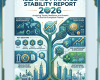
Key Highlights of the Islamic Finance Stability Report 2026

Islamic Finance Stability Report 2026 with global market, technology, risk, and sustainability sectors

The global Islamic financial services industry reached $4.4 trillion in assets in 2025, with growth in banking, capital markets, and insurance sectors. Islamic banking remains dominant, but non-banking segments are growing faster. The industry is concentrated in GCC and EAP regions (75% of assets). Sukuk markets expanded to $1.10 trillion, with strong growth in sustainability and climate-related issuances. Islamic insurance grew double-digit, driven by emerging markets and mandatory insurance requirements.


Rate this:

Money and Inflation

We often hear the term ‘inflation’ to describe a general increase in prices, this rise is typically caused by one of two factors. First, it can occur due to a change in the purchasing power of what the money symbolizes, often triggered by a deliberate reduction in the quantity of wealth it represents. This is the essence of monetary manipulation. Second, prices may rise due to a fall in purchasing power without any change in the quantity of the money itself. For instance, if gold becomes naturally cheaper because of a new supply, an Islamic Dinar made of 4.25 grams of gold will naturally buy less.

Rate this:

Measuring What Truly Matters: A Maqasid al Shariah Approach to Reforming Gross Domestic Product

When economic policy is guided solely by GDP, these ethical imperatives may be undermined. For example, a country may pursue industrial expansion that increases GDP but harms public health, violating hifz al nafs. Liberalization of entertainment sectors may boost GDP but erode moral and family values, violating hifz al din and hifz al nasl. Financial expansion through interest-based lending may raise GDP but undermine fairness and risk sharing, violating hifz al mal.

Rate this:

Debt Dominance Vs Risk-Sharing Ideals: How Sukuk Reshape the Debate

Using a contract-theoretic model, Khan compares two financial arrangements: the Fixed Return Scheme (FRS), which mirrors conventional debt, and the Variable Return Scheme (VRS), which represents profit-and-loss sharing (PLS) contracts such as Mudarabah or Musharakah. His analysis assumes a single lender allocating a fixed pool of funds across many independent projects, with symmetric information and costless observability.

Rate this: