Tag: IslamicFinance

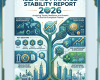
Key Highlights of the Islamic Finance Stability Report 2026

Islamic Finance Stability Report 2026 with global market, technology, risk, and sustainability sectors

The global Islamic financial services industry reached $4.4 trillion in assets in 2025, with growth in banking, capital markets, and insurance sectors. Islamic banking remains dominant, but non-banking segments are growing faster. The industry is concentrated in GCC and EAP regions (75% of assets). Sukuk markets expanded to $1.10 trillion, with strong growth in sustainability and climate-related issuances. Islamic insurance grew double-digit, driven by emerging markets and mandatory insurance requirements.

Rate this:

Islamic Economics and Economics as a System of Power

The paper begins by addressing the post-colonial emergence of Islamic economics, which sought to establish an independent discourse based on interest-free commerce, moral behavioral norms eschewing self-interest, and the pursuit of social justice. Despite these ideal goals, the field has faced severe criticisms from scholars such as Prof. Timur Kuran, Prof. Akram Khan, and Prof. Syed Tahir for failing to develop a unique value set, an original methodology, or the analytical power necessary to solve modern economic problems.

Rate this:

Highlights of Al-Baraka Forum 2026

The AlBaraka Forum held the 6th AlBaraka Forum Regional Conference on 19 & 20 January 2026 at the Pearl Continental Hotel, Karachi, under the theme “Islamic Economy in the Digital Age: Innovation within the Framework of Compliance”. On this occasion, H.E. Mr. Yousef Hassan Khalawi, Secretary General of AlBaraka Forum for Islamic Economy, assured that Islamic finance now has the potential to be on the same stage as conventional banking, as both enter the digital age at the same moment, asking the question: “Will we follow the same trend for the last fifty years? No. From today, by entering this age, either you choose to be innovative, or again, you will be number two, always like before.”

Rate this:

Iqtisaduna (Our economics)

The book begins with an incisive academic criticism of dialectical materialism, the philosophical backbone of Marxist thought. Al-Sadr argues that history is an incredibly complex phenomenon that cannot be reduced to a single driving force, such as the economic factor or the means of production. He asserts that various other elements, including religious convictions, political structures, and social dynamics, play primary and often independent roles in shaping human destiny. He challenges the foundational logic of materialism by pointing out that it cannot explain the “first push” of the universe or human development without acknowledging a non-material or Divine cause. For al-Sadr, the materialist view is a narrow lens that fails to capture the multidimensional nature of human existence.

Rate this:

Measuring What Truly Matters: A Maqasid al Shariah Approach to Reforming Gross Domestic Product

When economic policy is guided solely by GDP, these ethical imperatives may be undermined. For example, a country may pursue industrial expansion that increases GDP but harms public health, violating hifz al nafs. Liberalization of entertainment sectors may boost GDP but erode moral and family values, violating hifz al din and hifz al nasl. Financial expansion through interest-based lending may raise GDP but undermine fairness and risk sharing, violating hifz al mal.

Rate this:

Key Highlights of Islamic Finance Development Report 2025

The 2025 Islamic Finance Development Indicator (IFDI) assessed 140 countries, with the global average score declining to 11 due to new entrants scoring low in most indicators. The top 10 countries remained unchanged, led by Malaysia and the UAE, which excelled across all five indicators. Notable shifts include Bangladesh dropping out of the top 10 due to Islamic banking sector challenges, while Tanzania showed promise with Sukuk issuance and sector growth.

Rate this:

The Dual Structure of Islamic Economics: Economics of Religion and Religious Economics

Islamic economics is fundamentally a normative field, dedicated to the in-depth study of the normative principles outlined in the Qur’an and the Sunna (religious economics). In its empirical research, it probes into the economic behaviours and values of Muslims. As a result, it extensively utilizes economic tools to comprehend Muslim behaviour, integrating the economics of religion as one method of exploration.  In reconciling normative (what should be) and positive (what is) economics, the discipline also emphasizes facilitating the transition from the current state to an ideal one, aiming to transform ‘what is’ into ‘what should be’. This agenda is central to Islamic economics, as it is to religious economics.

Rate this:

Methodology of Economics: Secular Versus Islamic

The author asserts that Islamic economics is currently the result of applying Islamic rules and injunctions (Fiqh) to the secular economic framework, and is not yet a separate discipline that fully replaces secular economics. The author notes that methodology is a messy and confusing area in both fields. He highlights that in Islamic economics, it is often wrongly treated as a research design or work plan. The author explains that economics is usually called ‘science’ and is seen to be built for achieving its objectives on some perception of rationality. Methodology is the ‘theory of theories’; in the field of economics it refers to the “process economists use to authenticate the knowledge about economic phenomena”.

Rate this:

Do Islamic Cryptocurrency and Bitcoin Co-move at Different Investment Horizons?

Islamic digital currencies must refrain from a number of actions deemed prohibited by Islamic law, in contrast to traditional cryptocurrencies like Bitcoin. They cannot entail interest-based transactions (Riba), undue speculation or uncertainty (gharar), or gambling (maysir). Their frequent backing by physical assets, such as gold, gives them inherent stability and lessens the speculative bubbles that are typical of traditional cryptocurrencies, which is what makes them so intriguing.

Rate this: