Tag: EconomicJustice

Zakah Driven Islamic Economy and Interest Driven Capitalism

Entrepreneurs may have less or more capital than they plan to invest. Owners of surplus capital may withhold it or may make it available to investors. This may be based on profit sharing ratio or interest. In the Islamic system, charge of Zakah assisted by expected share in profit motivates the owners of capital to get it invested while in a capitalist system, interest motivates the capitalist creditors to lend capital for earning interest.

Rate this:

Behavioural and Islamic Economics Critique on Mainstream Views on Unemployment: A Joint Perspective

Mainstream economic policies often prioritize short-term goals, such as inflation control and GDP growth, over addressing the root causes of unemployment. This short-sighted approach can lead to unemployment persistence, even during periods of apparent economic growth. By contrast, behavioural economics urges policymakers to adopt long-term and holistic strategies that prioritize social welfare and sustainable job creation, offering a more nuanced and comprehensive perspective on addressing unemployment.

Rate this:

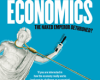
Debunking Economics

Prof. Keen shows the unscientific nature of economics by looking at the notion of diminishing marginal costs required to produce a downward slopping supply curve. He presents a summary of the empirical evidence which contradicts this key assumption of economics. How has economics handled this consistent evidence accumulated over many decades? By ignoring it. This speaks volumes for the way that economics handles contrary evidence to accepted beliefs. Not that this should come as a surprise, given that the notion was originally invented to ensure that neoclassical economics did not suggest that the economy would become dominated by big business (that this was precisely what was happening in the real economy at the time was considered irrelevant). The book also analyses a mathematical flaw in the standard argument against monopolies (often used to justify opposition to large firms). The book questions the conventional theory of the firm, arguing that monopolies can play a beneficial role in the economy.

Rate this: