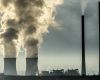
Tag: Environmental Crisis

Highlights of Net-Zero Banking Alliance 2024 Progress Report

When joining the Alliance, each member bank voluntarily commits to independently setting, disclosing, and reporting on their progress towards science-based de-carbonization targets, as data and methodologies allow. These individual targets aim to align portfolios to pathways that limit global warming to 1.5°C above the pre-industrial global average temperature, in line with the goals of the Paris Agreement. The Guidelines for Climate Target Setting for Banks outline eight key sectors: power generation, oil and gas, coal, transport, iron and steel, cement, commercial and residential real estate, and agriculture.
Rate this:

Highlights of State of Global Air Report 2024

The threat of air pollution is not new, but it is changing. Air pollution has contributed to death and disease and has hurt economic prospects and community resilience for decades. During that time, policies and technologies have drastically improved air quality in some areas, saving lives, and proving that pollution is not an inevitable by-product of economic development.
Air pollution is a complex mixture of particles and gases with sources and composition varying over space and time. While hundreds of chemical compounds can be measured in the air, governments typically measure only a small subset as indicators of the different types of air pollution and major sources contributing to that pollution.

Rate this:

Mainstream Economics’ War with the Environment: Counter-Critiques from Heterodox Economics and Islamic Economics

According to the World Health Organization, air pollution is now the world’s largest single environmental health risk. Air pollution is responsible for approximately 3.7 million deaths a year. Going forward, cities will generate approximately 2.2 billion tones of solid waste per year by 2025 which could poison soil and waterways, kill plants, and harm humans and animals.

Rate this:

Highlights of Financing for Sustainable Development Report 2024

Financing is crucial for achieving the Sustainable Development Goals (SDGs) because it enables countries to invest in the infrastructure, programs, and services necessary to achieve the goals. Without sufficient financing, countries may struggle to make progress towards the SDGs. The United Nations estimates that achieving the SDGs will require an additional $2.5 trillion in annual investment until 2030. Due to misaligned incentives, both public and private actors still invest in brown activities and have not yet fully aligned their decision-making and financing with the SDGs.

Rate this:

Dealing with Climate Challenge

Because of mere fate, a lot of people in the world, including Pakistan, have ended up in a position where they bear the torment of heat without much to do about it. They can not operate air-conditioners even when the temperature flares up and beyond the 35℃. Many do not even have one. “A man has only a certain capacity for battling with fate’, said Wodehouse. Well! this capacity is amazingly high in some people. But, there is still a long waiting period.

Rate this:

Climate Crisis Mitigation – Maqasid Al-Shariah Framework in Islamic Economics

Human behaviour, consumption and business activities have been identified as the main cause of the climate crisis the earth is facing at present, having seriously detrimental effects on the earth’s bio capacity to sustain life. These effects, referred to as anthropogenic impacts, are causing degradation of the globally shared public resource known as natural capital.

Rate this: