

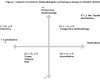
The methodological contribution of Shaikh (2026) is to formulate, more sharply than most of the literature, the choice between an assimilative economics that prices the sacred and a distinctive economics that abandons the analytical, and to argue – on the strength of World Values Survey evidence of broadly shared moral and market attitudes – that the discipline should occupy neither pole but an integrative middle. That diagnosis is sound, and the integrative impulse is the correct one. Its limitation is structural rather than substantive: Shaikh (2026) integrates the scope of analysis while partitioning its method, housing market and beyond-market behaviour under one disciplinary roof but assigning each its own separate toolkit. The result is integration by segregation, a one- dimensional fork resolved by keeping the two domains apart, and the seam shows wherever a single decision carries mixed motives.

