Tag: Islamic Economics

Moral Reflections on Economics, Vol 5, Issue 3

March 2025 (Vol 5, Issue 3) issue of Moral Reflections on Economics features Article on Reforms in the Zakat System, Highlights of Global Risk Report 2025 by Muhammad Hammad,
Limitations in Mainstream Economics by Mohammad Afif Naqib, Muhammad Faiq, Muhammad Luqman, Muhammad Afi and Mohamad Syahid, IEP Public Poll results on Effects of USA’s Reciprocal Tariffs on Asian Exports, Book review of Islamic Economics and Financial Crisis edited by Prof. Erhan Akkas, Research paper in focus on Blockchain Technology in Zakat Management in India by Arfan Ghouse and Ibrahim Mohammed, Reflections on Lessons from Fasting in Ramadan and regular sections of market news, economic and financial indicators and call for papers.

Rate this:

Islamic Financial Inclusion and Economic Growth in OIC Countries: Panel Quantile Regression Analysis

The authors argue that by expanding the network of Islamic banks and enhancing the technological infrastructure for financial access, policymakers can harness the transformative potential of Islamic finance to promote sustainable economic growth and development in the OIC countries. The authors urge policymakers to prioritize initiatives aimed at expanding the network of Islamic banks and enhancing technological infrastructure for financial access.

Rate this:

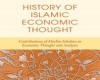
History of Islamic Economic Thought

Prof. Islahi argues that Muslim scholars made substantial contributions to economic thought, influencing both the development of Islamic economics and, indirectly, the foundations of modern Western economic theory. He challenges the notion that modern economics is solely a product of Western thought, highlighting the intellectual debt owed to earlier Muslim thinkers.

Rate this:

Islamic Finance and Inclusive Economic Growth

In a market following Islamic norms and values, the market forces will determine which Halal goods and services should be produced and offered at what price. Through private sector investment and production, resource markets and product markets will function to enable households to obtain purchasing power by providing rentable factors of production like labour services (Ijarat-ul-Ashkhas) or usufruct of a naturally existing or produced tangible asset (Ijarat-ul-A’yan) in the production process and earn compensation in terms of wage and rent, respectively.

Rate this:

Moral Reflections on Economics, Vol 5, Issue 2

February 2025 (Vol 5, Issue 2) issue of Moral Reflections on Economics features article on Islamic Finance and Inclusive Growth, Highlights of AlBaraka Forum by Muhammad Hammad, IEP Public Poll results on Effects of USA’s Pullout from Climate Commitments, Book review of History of Islamic Economics Thought by Prof. Abdul Azim Islahi, Research paper in focus on Financial Inclusion and Growth in OIC Countries by Massinissa Ameziane, Reflections on Qur’anic Description of Nature,
Regular sections of market news, economic and financial indicators and call for papers.

Rate this:

Theories of Economic Development and Islamic Economics

In Harrod (1939)-Domer (1946) and Solow’s Growth model, the emphasis is on increasing savings and investments and that is supposed to lead to increased productivity corresponding to lower Incremental capital output (ICOR) ratio in Harrod (1939)-Domer (1946) model and hence higher rate of growth and to higher steady state level of output in Solow’s Growth model. Savings that result in investments contribute to growth. Essentially, what leads to growth is investment. Savings are only the source of investment funds.

Rate this:

Moral Reflections on Economics, Vol 5, Issue 1

January 2025 (Vol 5, Issue 1) issue of Moral Reflections on Economics is online. It features article on Theories of Economic Development and Islamic Economics, Highlights of Global Hunger Report 2024 by Hammad, IEP Public Poll results on Challenges to Banking Sector in 2025, book review of Reconstruction of Religious Thought in Islam by Allama Iqbal, research paper in focus on The Value of Societal Values in Finance by Carolin Schellhorn, Reflections on Quran and Ethics by Abrar Ahmed and regular sections of market news, economic and financial indicators and call for papers.

Rate this:

The Political Economics of Green Transitions

The authors caution that democratic politics may or may not help fix dynamic social problems. The authors argue that even in their own optimistic model of politics—where parties maximize average utility of those currently alive— equilibrium policies may not put society on the right path, and the speed of the green transition may be too slow. Climate change and environmental degradation is a slow and cumulative process. To protect environment, the efforts also need to be cumulative and consistent. A self-centric secular worldview encourages the self-centric use of private property resources. However, even small things done collectively and consistently can have a larger effect.

Rate this: