Tag: Maqasid-e-Shariah

Methodology of Economics: Secular Versus Islamic

The author asserts that Islamic economics is currently the result of applying Islamic rules and injunctions (Fiqh) to the secular economic framework, and is not yet a separate discipline that fully replaces secular economics. The author notes that methodology is a messy and confusing area in both fields. He highlights that in Islamic economics, it is often wrongly treated as a research design or work plan. The author explains that economics is usually called ‘science’ and is seen to be built for achieving its objectives on some perception of rationality. Methodology is the ‘theory of theories’; in the field of economics it refers to the “process economists use to authenticate the knowledge about economic phenomena”.


Rate this:

Kitab al-Isharah ila Mahasin at-Tijarah

Author explained the problem of double coincidence of wants in the barter trade. He wrote that even if the wants coincide, there may be disagreement on the counter values in exchange. Without divisibility of the good, the barter economy runs into barriers to trade. He also wrote on prudence in economic management. He emphasized the need for proactive procurement and infrastructure investments to ensure smooth supply chain, production process and market stability. He favoured procurement from the original nearby source to avoid intermediation mark-up and make purchases when the market has adequate supply and availability so as to avoid cost-push inflation.

Rate this:

Islamic Economics: A Short History

The earlier scholars provided application of Islamic juristic principles to derive and apply the Islamic teachings related to commerce, entrepreneurship and consumption. Muslim scholarship initially focused on public finance and its administration to deal with the practical problems of the newly formed state which expanded rapidly and required sound legal and administrative framework to legislate economic activities centred around agriculture and trade.

Rate this:

Economic Development in an Islamic Framework

Prof. Khurshid Ahmad argues that the Western model of development overemphasized industrialization, capital formation, and technological transfer while neglecting social and cultural factors. This approach adopted as it is by the third world countries has led to negative consequences, including increased poverty, inequality, and dependence on foreign aid. Prof. Khurshid Ahmad emphasizes that the Islamic concept of development focuses on human development across moral, spiritual, and material dimensions.  It encompasses the purification and growth of individuals and societies, striving for comprehensive well-being and prosperity in this world and the hereafter. He lists the goals of development policy within an Islamic framework which include human resource development, expansion of useful production, improvement in the quality of life, balanced development, evolution of new technology, and reduction of national dependency on the outside world.   

Rate this:

Remembering Prof. Zubair Hasan

He wrote extensively on Islamic microeconomics giving the Islamic perspective to the theory of consumer and producer behaviour. He would go beyond philosophical debates and narratives to also discuss the operationalization of the analysis of consumer and producer behaviour. He wrote several books, book chapters and research papers on Economics, Microeconomics, Development Economics, Essays on the issues in Islamic Economics and Islamic Banking.

Rate this:

Outline of an Islamic Fiscal Policy

Regarding taxation, Islam has laid out clear guidelines: not only is excessive taxation sinful, but even when collecting taxes even from non-Muslims, there should be no element of hardship. For example, Urwah ibn Zubayr narrated that Hisham ibn Hakeem (RA) once saw a tax collector in Homs mistreating some Christian Copts by making them stand under the sun while collecting Jizya. He objected, citing the Prophet Muhammad (PBUH) who said: “Allah will punish those who torment people in this world” (Sunan Abi Dawood 3045).

Rate this:

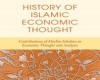
History of Islamic Economic Thought

Prof. Islahi argues that Muslim scholars made substantial contributions to economic thought, influencing both the development of Islamic economics and, indirectly, the foundations of modern Western economic theory. He challenges the notion that modern economics is solely a product of Western thought, highlighting the intellectual debt owed to earlier Muslim thinkers.

Rate this:

Islamic Finance and Inclusive Economic Growth

In a market following Islamic norms and values, the market forces will determine which Halal goods and services should be produced and offered at what price. Through private sector investment and production, resource markets and product markets will function to enable households to obtain purchasing power by providing rentable factors of production like labour services (Ijarat-ul-Ashkhas) or usufruct of a naturally existing or produced tangible asset (Ijarat-ul-A’yan) in the production process and earn compensation in terms of wage and rent, respectively.

Rate this: