Tag: Tariqullah Khan

Integrative Methodology of Islamic Economics: A Note

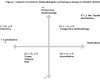
The methodological contribution of Shaikh (2026) is to formulate, more sharply than most of the literature, the choice between an assimilative economics that prices the sacred and a distinctive economics that abandons the analytical, and to argue – on the strength of World Values Survey evidence of broadly shared moral and market attitudes – that the discipline should occupy neither pole but an integrative middle. That diagnosis is sound, and the integrative impulse is the correct one. Its limitation is structural rather than substantive: Shaikh (2026) integrates the scope of analysis while partitioning its method, housing market and beyond-market behaviour under one disciplinary roof but assigning each its own separate toolkit. The result is integration by segregation, a one- dimensional fork resolved by keeping the two domains apart, and the seam shows wherever a single decision carries mixed motives.

Rate this:

Moral Reflections on Economics, Vol 6, Issue 6

June 2026 issue (Vol 6, Issue 6) of Moral Reflections on Economics features

• “Integrative Methodology of Islamic Economics: A Note” by Prof. Dr. Tariqullah Khan, CEO and Principal Economist, Ventureethica, Toronto, Canada.

• “Beyond Pork and Alcohol: What Halal Compliance Really Means in the Modern Era”  by Dr. Nezir Khan.

• Highlights of IFSB Report 2026 by Muhammad Hammad.

• Book review of “The Great Escape” by Prof. Angus Deaton.

• Research paper in focus on “Assessing Universal Basic Income: An Islamic Historical and Maqāşidī Perspective” by Prof. Abdulazeem Abozaid and Saqib Hafiz Khateeb.

• Regular sections of reflections, market news, economic and financial indicators and call for papers.

Rate this:

Moral Reflections on Economics, Vol 6, Issue 4

April 2026 issue (Vol 6, Issue 4) of Moral Reflections on Economics features

• “Remembering Royal Professor Syed Muhammad Naquib al-Attas”.

• “The Story of Humans – A Documentary”  conceived and created by Dr. Rehan Ahmed Yousufi.

• Highlights of energy Innovation Report by Muhammad Hammad.

• Book review of “Islamization of Modern Science and Its Philosophy” by Prof. Muhammad Mumtaz Ali.

• Research paper in focus on “Mobilising Home Equity for Climate-Resilient Affordable Housing Through Tokenisation” by Prof. Dr. Tariqullah Khan.

• Regular sections of reflections, market news, economic and financial indicators and call for papers.

Rate this:

Moral Reflections on Economics, Vol 5, Issue 11

November issue of Moral Reflections on Economics is published, featuring:
• “Complexity Economics: Dynamic Perspective” by Prof. Dr. Tariqullah Khan.
• Problems with Interest Based System by Hifz Ur Rab.
• Highlights of Social Report 2025 by Hammad.
• Book review of “Methodology of Economics” by Dr. Waleed.
• Research paper in focus on “The Economics Profession, the Financial Crisis, and Method” by Dr. David Colander
• Regular sections of reflections, market news, economic and financial indicators and call for papers.

Rate this:

Climate Crisis Mitigation – Maqasid Al-Shariah Framework in Islamic Economics

Human behaviour, consumption and business activities have been identified as the main cause of the climate crisis the earth is facing at present, having seriously detrimental effects on the earth’s bio capacity to sustain life. These effects, referred to as anthropogenic impacts, are causing degradation of the globally shared public resource known as natural capital.

Rate this:

IEP Forum on FSC Verdict on Riba – Experts View – Prof. Tariqullah Khan

Islamic Economics Project is making a humble effort to collect the views of Shari’ah scholars, regulators, practitioners, lawyers and academic experts to deliberate on the future course of action and generate ideas and debate on how to make this transformation possible. We got the chance to get reaction and response from Prof. Tariqullah Khan. we got the chance to get reaction and response from Prof. Tariqullah Khan, who is also the recipient of Islamic Development Bank Laureate Award for his work in Islamic economics and circular economy in 2022. We hope that the views expressed and shared with relevant audience and stakeholders will generate practicable ideas and keep the momentum towards achieving the end goal of an economy that is in compliance with Shari’ah and is able to utilize the instruments and institutions in the Islamic economic teachings.

Rate this: