Tag: Tawhid

Integrative Methodology of Islamic Economics: A Note

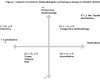
The methodological contribution of Shaikh (2026) is to formulate, more sharply than most of the literature, the choice between an assimilative economics that prices the sacred and a distinctive economics that abandons the analytical, and to argue – on the strength of World Values Survey evidence of broadly shared moral and market attitudes – that the discipline should occupy neither pole but an integrative middle. That diagnosis is sound, and the integrative impulse is the correct one. Its limitation is structural rather than substantive: Shaikh (2026) integrates the scope of analysis while partitioning its method, housing market and beyond-market behaviour under one disciplinary roof but assigning each its own separate toolkit. The result is integration by segregation, a one- dimensional fork resolved by keeping the two domains apart, and the seam shows wherever a single decision carries mixed motives.

Rate this:

Economic Development in an Islamic Framework

Prof. Khurshid Ahmad argues that the Western model of development overemphasized industrialization, capital formation, and technological transfer while neglecting social and cultural factors. This approach adopted as it is by the third world countries has led to negative consequences, including increased poverty, inequality, and dependence on foreign aid. Prof. Khurshid Ahmad emphasizes that the Islamic concept of development focuses on human development across moral, spiritual, and material dimensions.  It encompasses the purification and growth of individuals and societies, striving for comprehensive well-being and prosperity in this world and the hereafter. He lists the goals of development policy within an Islamic framework which include human resource development, expansion of useful production, improvement in the quality of life, balanced development, evolution of new technology, and reduction of national dependency on the outside world.   

Rate this: