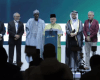
Experts urge adopting Islamic Economics to meet Sustainable Development Goals at Ist Islamic Economics and Development Conference at Quaid e Azam University Islamabad on December 7, 2023.
The aim of Islamic social finance is to support socio-economic empowerment, progress, and the development of society. Pooling resources from social finance instruments, like Zakat (alms giving), Waqf (endowments), Qardh al-hasan (interest free benevolent lending), Takaful, and Sadaqah (charity), can establish and lead to growth of lower-income micro-enterprises in the country.
This paper discusses the concept of Waqf and university endowments. The author highlights that contemporary university endowments take their inspiration from the concept of Waqf.
This paper discusses that the socio-economic aspect of Waqf is much less focused upon in research studies. More focus is on jurisprudential and legalistic studies. While they are important, it is also vital to discuss and pay attention to socio-economic aspects of Waqf in Waqf economics.
This paper discusses the issue of risk vis-Ã -vis the perpetuity restriction principle inherent in Waqf (Islamic endowment). The authors contend that as a result of Ijtihad, particularly Istihsan bi-al-urf (juristic preference on the basis of custom), endowing cash as Waqf is now accepted in the Muslim world.
The noted authors explain that the main contribution of this study is to present a model in which juristic and moralist positions are endogenized and augmented to constitute Islamic social welfare function.
The discussions in the forum emphasized on creating synergy between Zakat and Waqf and integrate both the institutions together in institutional design and delivery as well as in public and social policy in member countries.
Cash Waqf has a unique feature of flexibility in allocation of economic resources for their use in redistribution efforts, in terms of cash transfers, asset transfers, skills transfer through education and productivity transfers through health services.
In this paper, the author had attempted to provide a systematic literature review on Waqf using two prominent research databases, i.e. Scopus and Web of Science. The author, in final analysis, analyzed 257 research documents.
This paper presents statistics to illustrate the economic effects of COVID-19 in the global economy. Poverty and unemployment in the informal sector of developing economies is on the rise. On the other hand, developed economies have also seen economic contraction. Capital markets have seen sharp decline in the early part of 2020. However, the author notes that Islamic equity portfolios were less affected. This finding is discovered in other empirical studies as well where Islamic portfolios are found to perform relatively better in economic and market downturns.