
Tag: WealthDistribution

Rethinking Modern Money

Team discussing modern money beneath a decentralized finance whiteboard

The inclusion of dedicated sessions during the Muzakarah on The Concept of Modern Money in the Financial System and How It Relates to Money Creation as well as Preliminary Shari’ah Review on the Concept and Operation of Modern Money demonstrates that scholars now consider these issues worthy of independent and systematic examination. The discussions also indicate a shift from limiting the debate to the classical question of whether paper currency assumes the legal status of gold and silver. While this remains an important juristic issue, the contemporary monetary system presents a much broader set of questions.

Rate this:

The Late Dr. Muhammad Umar Chapra

Dr. Muhammad Umar Chapra (February 1, 1933 – June 13, 2026) was a prominent economist, researcher, professor, and intellectual. During his student days, he was associated with Islami Jamiat-e-Talaba Karachi, and thereafter, throughout his life, he remained actively engaged in the field of knowledge and scholarship as a servant of Islam. As an author of numerous scholarly books and a creative thinker in Islamic economics, he left an indelible mark.

Rate this:

Integrative Methodology of Islamic Economics: A Note

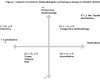
The methodological contribution of Shaikh (2026) is to formulate, more sharply than most of the literature, the choice between an assimilative economics that prices the sacred and a distinctive economics that abandons the analytical, and to argue – on the strength of World Values Survey evidence of broadly shared moral and market attitudes – that the discipline should occupy neither pole but an integrative middle. That diagnosis is sound, and the integrative impulse is the correct one. Its limitation is structural rather than substantive: Shaikh (2026) integrates the scope of analysis while partitioning its method, housing market and beyond-market behaviour under one disciplinary roof but assigning each its own separate toolkit. The result is integration by segregation, a one- dimensional fork resolved by keeping the two domains apart, and the seam shows wherever a single decision carries mixed motives.

Rate this: