

Allama Muhammad Iqbal
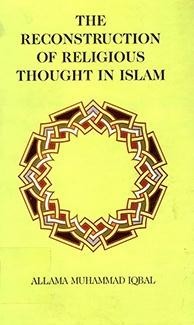
Allama Iqbal in the book Reconstruction of Religious Thought in Islam argues that while religion has fundamental belief system which does not require change, the religious thought which emerges from the understanding of the sources of religious knowledge requires a revisit or even reconstruction at times. However, while doing this task, one should not give superiority to philosophy or scientific knowledge. We discuss the illuminating ideas covered in the lectures one by one.
Knowledge and Religious Experience
Allama Iqbal contends that religious experience is also a factual experience just like observation through sense perception. The inner experience is real for the person even if it is incommunicable and externally unverifiable. If a person feels happy or sad or have love for someone, the person knows these emotions as a factual reality.
Prophets (PBUT) receive religious awakening and guidance through divine inspiration. Their legacy and imprint on society is a pragmatic test to ascertain that their religious experience is not some psychological disorder or figment of imagination. Allama Iqbal writes:
“Another way of judging the value of a prophet‟s religious experience, therefore, would be to examine the type of manhood that he has created, and the cultural world that has sprung out of the spirit of his message.”
Allama Iqbal further writes:
“Prophet Muhammad (PBUH) gave a fresh direction to the course of human history, it is a point of the highest psychological interest to search his original experience which has turned slaves into leaders of men, and has inspired the conduct and shaped the career of whole races of mankind. Judging from the various types of activity that emanated from the movement initiated by the Prophet of Islam, his spiritual tension and the kind of behaviour which issued from it, cannot be regarded as a response to a mere fantasy inside his brain.”
Nonetheless, the pragmatic test has to be applied carefully such that it does not become inconsistent while looking at the other prophets of Islam (PBUT). Qur’an mentions that some prophets (PBUT) were even martyred as well and some faced difficult circumstances and were rejected by the majority of direct recipients in their lives and even afterwards.
The way to apply the pragmatic test is to look at the i) authenticity of the religious knowledge revealed as Wahi, ii) consistency of the religious knowledge and iii) character of the prophet before and after the religious experience in the form of receiving Wahi. Indeed, Prophet Muhammad (PBUH) did not learn poetry, history or science formally, yet the Qur’an revealed to Him and passed onto the companions and transmitted to future generations authentically does not include any contradictions in itself and also in comparison to established historical and scientific facts.
Allama Iqbal on Philosophical Arguments for God
Allama Iqbal does not subscribe to the traditional philosophical arguments for proving the existence of God. The cosmological argument says that contingent beings cannot explain their existence on their own. They cannot bring about their own existence. A necessary being is necessary which is not contingent on other beings to avoid infinite regress in the backward flow of causal chain. The uncaused caused has to be a necessary being that exists eternally outside of universe and time-space.
However, Allama Iqbal questions why to stop at first cause? He argues that finite effect can give only a finite cause. The first cause excludes its effect. It implies that effect, constituting a limit to its own cause, reduces it to something finite.
The teleological or design argument postulates that the apparent design, fine tuning and mathematical coherence in the universe suggests that the universe is designed. The immaculate working of laws of physics requires that somebody must have put the laws of physics and forces in place. Thus, design requires a designer.
Nonetheless, Allama Iqbal argues that teleological or design argument can go as far as to prove contriver or designer, but not a personal God.
The ontological argument says that if a greatest necessary being can be imagined, then he has to exist in reality. It is because a greatest necessary being that exists in reality is superior to the one that only exists in imagination.
On the ontological argument, Allama Iqbal says that logical possibility does not directly prove physical existence. If one can imagine having 300 dollars in the pocket, they will not come in pocket just because the idea can be imagined. If one can imagine a unicorn, it does not mean that unicorns are real.
It appears that Allama Iqbal is in search of a personal God whereas philosophy can only help in arguing for a possibility or necessity of an uncaused cause or designer.
The philosophical arguments for the existence of God do not convince Iqbal, not so much because of their absolute impotency, but because they do not serve the Iqbal’s aim of creating a personal connection with God.
Allama Iqbal seems to be interested in building a direct and personal connection with God. Seemingly, Iqbal thinks that this can more emphatically prove not only the existence of God, but also enable one to establish a personal connection with God.
Allama Iqbal picks the unresolved paradoxes relating to time and space to dispel the myth that science has found ultimate reality. Highlighting that science is revising classical Newtonian Physics and embracing Quantum Physics, Iqbal argues that many seemingly not understandable phenomena are understandable with new ideas about time-space and matter in science.
Allama Iqbal argues that God does not exist in serial time. God exists in eternal now. This can help in comprehending predestination (Taqdir). All potentialities and possibilities are in the complete knowledge of God. Future holds potentiality and possibility for humans. Allama Iqbal writes:
“We must not forget that the words proximity, contact, and mutual separation which apply to material bodies do not apply to God. Divine life is in touch with the whole universe on the analogy of the soul‟s contact with the body.”
Allama Iqbal does not deny free will, but also explains how the idea of free will is still consistent with God having a complete and perfect knowledge as for God, time is not serial. God exists in eternal now. The concepts of past, present and future in serial time do not apply to God. Humans can be immortal in the God’s scheme provided they resonate with God’s plan and directives.
Allama Iqbal also explains how Tauhid can be a valid basis of promoting ideas of peace, justice and progress. He writes:
“The essence of Tauhid, as a working idea, is equality, solidarity, and freedom.”
Thus, Tauhid promotes the idea of equality and solidarity by regarding every creature having a single and uniform source of creation, which is God. Since God is the single creator, humans are not bounded by or inferior to each other. This idea can be a valid basis for freedom, equal access to justice and end any class conflict and racism.
The Spirit of Muslim Culture
Allama Iqbal argues that Islamic culture encourages inductive method, exploration, movement, progress and it is anti-classical. He writes:
“It is a mistake to suppose that the experimental method is a European discovery. Where did Roger Bacon receive his scientific training? – In the Muslim universities of Spain.”
He further writes: “Europe has been rather slow to recognize the Islamic origin of her scientific method.”
Allama Iqbal is not concerned with theory of evolution challenging the religious anthropology. He writes:
“Side by side, with the progress of mathematical thought in Islam, we find the idea of evolution gradually shaping itself. It was Jahiz who was the first to note the changes in bird-life caused by migrations. Later Ibn Maskawaih gave it the shape of a more definite theory, and adopted it in his theological work al-Fauz al-Asghar.”
Allama Iqbal on Science and Religion
Allama Iqbal thinks that science and religion strive to explain the same reality. He writes:
“The truth is that the religious and the scientific processes, though involving different methods, are identical in their final aim. Both aim at reaching the most real.”
Allama Iqbal does not commit to neutrality between science and religion. Rather, he thinks that both can be complementary. In fact, the scientific developments emerging from the inductive method owe thanks to Muslim tradition which pioneered the inductive method. However, he cautions that philosophy and science are not superior to religious knowledge.
“To rationalize faith is not to admit the superiority of philosophy over religion. Philosophy, no doubt, has jurisdiction to judge religion, but what is to be judged is of such a nature that it will not submit to the jurisdiction of philosophy except on its own terms.”
Allama Iqbal also criticizes the fact that specialization of human knowledge and sciences blur the holistic vision about reality. He writes:
“Natural Science deals with matter, with life, and with mind; but the moment you ask the question how matter, life, and mind are mutually related, you begin to see the sectional character of the various sciences that deal with them and the inability of these sciences, taken singly, to furnish a complete answer to your question.”
He further writes:
“In fact, the various natural sciences are like so many vultures falling on the dead body of Nature, and each running away with a piece of its flesh. Nature as the subject of science is a highly artificial affair, and this artificiality is the result of that selective process to which science must subject her in the interests of precision. The moment you put the subject of science in the total of human experience it begins to disclose a different character.”
Allama Iqbal maintains that in contrast, religion looks at reality in a wholesome way rather than in a piecemeal way. Thus, the complete view of reality cannot come from sectional analysis of knowledge. He writes:
“Religion, which demands the whole of Reality and for this reason must occupy a central place in any synthesis of all the data of human experience, has no reason to be afraid of any sectional views of Reality. Natural Science is by nature sectional; it cannot, if it is true to its own nature and function, set up its theory as a complete view of Reality. The concepts we use in the organization of knowledge are, therefore, sectional in character, and their application is relative to the level of experience to which they are applied.”
Allama Iqbal thinks that holistic analysis of a conscious mind cannot come in the grip of science by applying the mechanical cause and effect paradigm. He writes:
“The concept of „cause‟, for instance, the essential feature of which is priority to the effect, is relative to the subject-matter of physical science which studies one special kind of activity to the exclusion of other forms of activity observed by others. When we rise to the level of life and mind the concept of cause fails us, and we stand in need of concepts of a different order of thought. The action of living organisms, initiated and planned in view of an end, is totally different to causal action.
He further writes:
“The subject-matter of our inquiry, therefore, demands the concepts of„end‟ and „purpose‟, which act from within unlike the concept of cause which is external to the effect and acts from without. No doubt, there are aspects of the activity of a living organism which it shares with other objects of Nature. In the observation of these aspects the concepts of physics and chemistry would be needed; but the behaviour of the organism is essentially a matter of inheritance and incapable of sufficient explanation in terms of molecular physics.”
Allama Iqbal argues that the way to pure objectivity lies through what may be called the purification of experience. He writes:
“We must make a distinction between experience as a natural fact, significant of the normally observable behaviour of Reality, and experience as significant of the inner nature of Reality. As a natural fact it is explained in the light of its antecedents, psychological and physiological; as significant of the inner nature of Reality we shall have to apply criteria of a different kind to clarify its meaning. In the domain of science we try to understand its meaning in reference to the external behaviour of Reality; in the domain of religion we take it as representative of some kind of Reality and try to discover its meanings in reference mainly to the inner nature of that Reality.”
The Principle of Movement in the Structure of Islam
On the need for reconstructing religious thought in societal matters, Allama Iqbal urges the use of Ijtihad to avoid stagnation and foster movement. Allama Iqbal writes:
“The ultimate spiritual basis of all life, as conceived by Islam, is eternal and reveals itself in variety and change. A society based on such a conception of Reality must reconcile, in its life, the categories of permanence and change. It must possess eternal principles to regulate its collective life, for the eternal gives us a foothold in the world of perpetual change. But eternal principles when they are understood to exclude all possibilities of change which, according to the Qur‟an, is one of the greatest „signs‟ of God, tend to immobilize what is essentially mobile in its nature. The failure of the Europe in political and social sciences illustrates the former principle; the immobility of Islam during the last five hundred years illustrates the latter. What then is the principle of movement in the structure of Islam? This is known as Ijtihad.”
He further cautions about stagnation, complacency and immobility.
“A false reverence for past history and its artificial resurrection constitute no remedy for a people‟s decay.”
Allama Iqbal mentions the possible reason of why Ijtihad Bil Ijma was not given due importance in the early period of Muslim civilization. He writes:
“Possibly its transformation into a permanent legislative institution was contrary to the political interests of the kind of absolute monarchy that grew up in Islam immediately after the fourth Caliph. It was, I think, favourable to the interest of the Umayyad and the Abbasid Caliphs to leave the power of Ijtihad to individual Mujtahids rather than encourage the formation of a permanent assembly which might become too powerful for them.”
Allama Iqbal is optimistic about potential of mobility and dynamism in Muslim culture provided that forces of stagnation must be overcome. He writes:
“Legal principles in Islam have great potentialities of expansion and development by interpretation.”
Allama Iqbal is apprehensive about excessive conditions put on a Mujtahid. He writes:
“The idea of complete Ijtihad is hedged round by conditions which are well-nigh impossible of realization in a single individual.”
Rather than putting so much focus on enormous conditions of intellect and knowledge in an individual Mujtahid, Allama Iqbal favors Ijtihad Bil-Ijma. The spirit of consensus can be operationally applied through republican form of political order. However, Iqbal is not favoring secular democracy. He urges for integrating Ulema in the consultative process. However, he also urges Ulema to revisit their religious thought amidst the new realities and advancements in knowledge.
Allama Iqbal praises the Usul-e-Fiqh of Istihsan in Hanafi Fiqh which can allow personal and fresh judgments with the spirit of Ijtihad. However, his idea of revisiting Ahkam-ul-Muamalat like Hudud by contextualizing them and not considering them universally applicable for all generations is problematic.
However, it must be noted that Allama Iqbal was not writing from the perspective of a jurist. He was trying to defend certain applications of Fiqh-ul- Muamlat.
It is true that the solution cannot be to undermine or even alter and redesign the clear injunctions on inheritance laws, family laws and Hudud altogether. Alternate explanations can be sought while ensuring consistency with revealed knowledge. Actually, this was the larger point about which Allama Iqbal wanted to create urgency. To ensure that such reconstruction shall not be disruptive and contradictory to the revealed knowledge, Allama Iqbal did favor the use of Ijma and highlighted the role of Ulema as we mention from his quotes later in the review.
Allama Iqbal on State in Islamic Culture
Allama Iqbal envisions Islamic state to be guided by revealed knowledge, but which needs to be interpreted with critical, objective, holistic and dynamic perspective. He writes:
“The state in Islam is a theocracy, not in the sense that it is headed by a representative of God on earth who can always screen his despotic will behind his supposed infallibility.”
Allama Iqbal maintains that Ulema shall have a role in guiding legislation. He writes:
“Ulema should form a vital part of a Muslim legislative assembly helping and guiding free discussion on questions relating to law.”
In another place, Allama Iqbal thinks that it is possible to have a theocracy under the republic form of state where both the religiously guided knowledge as interpreted objectively and dynamically with consensus simultaneously works alongside the collective will of people. Eternal principles of religion shall be retained while embracing a degree of change and dynamism. He writes:
“The growth of republican spirit and the gradual formation of legislative assemblies in Muslim lands constitute a great step in advance. The transfer of the power of Ijtihad from individual representatives of schools to a Muslim legislative assembly which, in view of the growth of opposing sects, is the only possible form Ijma can take in modern times will secure contributions to legal discussion from laymen who happen to possess a keen insight into affairs.”
Allama Iqbal cautions against clergy promoting stagnation and despotism. But their exercise of interpretation shall use collective faculties in a republic.
He writes: “We heartily welcome the liberal movement in modern Islam.” He further writes: “The republican form of government is not only thoroughly consistent with the spirit of Islam, but has also become a necessity in view of the new forces that are set free in the world of Islam.”
Allama Iqbal on Divine Appraisal and Immortality
One point of Allama Iqbal which bothered Muslims was about the nature of hell and heaven. Iqbal said that hell and heaven are states and not localities.
To understand his larger point, one must keep in mind the apprehensions Iqbal was fighting against. He was trying to answer the apprehensions about eternal damnation in hell and God being revengeful (God forbid). Allama Iqbal tried to answer by arguing that humans would still have opportunity to correct their character while in a state of hell.
However, his defense is not entirely consistent with religious worldview. The question could be answered through the concept of forgiveness, mercy, justice and hint of eternal nature of heaven promised in Qur’an, but not for hell. However, the trial nature of worldly life cannot be undermined. Iqbal is right in saying that life is continuous and that heaven may also provide opportunities of creative unfolding for humans. But, the concept of divine justice implies that fate in life hereafter is shaped and built by human beings by exercise of free will in this worldly life.
This is one problem with Allama Iqbal’s case for religion and reconstruction. He wants to prove religious experience as a possibility at the level of intuition. The mystical experience is unverifiable, un- communicable and also inconsistent with the universal meaning and code which Allah gives divinely through a Prophet. In explaining the possibility of Wahi, it is inappropriate to show it as the universal way to receive religious knowledge by inner experience and intuition alone.
Is Religion Possible
Allama Iqbal is optimistic about the future of religion. He does not see a tension between faith and rationality. In fact, he thinks that peace, progress and freedom is possible through religion as other worldviews and doctrines end up creating exclusion, separatism and antagonism. He writes:
“Both nationalism and atheistic socialism, at least in the present state of human adjustments, must draw upon the psychological forces of hate, suspicion, and resentment which tend to impoverish the soul of man and close up his hidden sources of spiritual energy. Neither the technique of medieval mysticism, nor nationalism, nor atheistic socialism can cure the ills of a despairing humanity.”
Allama Iqbal writes about the promise of religion by stating:
“Religion, which in its higher manifestations is neither dogma, nor priesthood, nor ritual, can alone ethically prepare the modern man for the burden of the great responsibility which the advancement of modern science necessarily involves, and restore to him that attitude of faith which makes him capable of winning personality here and retaining it in hereafter.”
He further writes:
“It is only by rising to a fresh vision of his origin and future, his whence and whither, that man will eventually triumph over a society motivated by an inhuman competition, and a civilization which has lost its spiritual unity by its inner conflict of religious and political values.
Conclusion
Overall, the lectures given by Allama Iqbal even after one century are as fresh and illuminating as ever. They show the tremendous depth and breadth of his knowledge, vision and also his commitment and passion for religion and its progressive application at the personal level and societal level in Muslim polity.
Amidst the height of passion and devotion, Allama Iqbal still highlights important factors of stagnation which need to be avoided.
He urges Ijtihad, Ijma and reconstruction of thoughts to foster change while retaining the eternal principles of religion.
Categories: Science and Religion
 Islamic Economics Project