Author Archives

Unknown's avatar

hammadiep

Remembering Dr. Umer Chapra

Dr. Umer Chapra was born on February 1, 1933, in Bombay, British India. Chapra’s family moved to Karachi following the 1947 partition. Despite early financial hardships after his father passed away when Chapra was only six, his mother prioritized his education. This investment paved the way for an extraordinary academic trajectory. He attended the University of Karachi, topping his class to earn a Bachelor of Commerce (B. Com) in 1954, followed by a Master of Commerce (M. Com) in 1956. In 1950, out of 25,000 students who sat for the high school leaving examinations in Karachi, Chapra topped the list, earning the prestigious Model Student title.
Rate this:

Assessing Universal Basic Income: An Islamic Historical and Maqāşidī Perspective

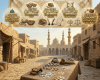
Group of people in traditional clothing gathering around a table of coins with five illuminated Islamic principles above

The authors identify a significant blind spot in modern Islamic economics, noting that contemporary Muslim jurists have historically ignored the concept of a universal, unconditional cash transfer. This silence stems from a long-standing academic preoccupation with targeted, faith-based wealth redistribution mechanisms like Zakāh and Sadaqah, which are structurally designed for selective poverty alleviation rather than serving as a baseline macroeconomic floor for every citizen regardless of financial status. By shifting the analytical lens toward the broader state obligation of ensuring collective welfare, the authors construct a fresh, normative framework that integrates UBI within an Islamic moral economy.

Rate this:

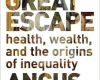
The Great Escape

In The Great Escape: Health, Wealth, and the Origins of Inequality, Nobel Laureate Angus Deaton provides a sweeping historical analysis of humanity’s remarkable progress in overcoming poverty and deprivation. Prof. Deaton frames this journey as a massive, ongoing escape from the historical traps of high infant mortality, frequent famines, and pervasive destitution. Driven primarily by the wealth generated during the Industrial Revolution and subsequent breakthroughs in public health, global life expectancy has soared and extreme poverty has plummeted over the past two centuries. This trajectory represents an unprecedented triumph of human ingenuity, demonstrating how economic growth and scientific innovation can fundamentally transform global living standards.

Rate this:

Key Highlights of the Islamic Finance Stability Report 2026

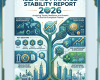
Islamic Finance Stability Report 2026 with global market, technology, risk, and sustainability sectors

The global Islamic financial services industry reached $4.4 trillion in assets in 2025, with growth in banking, capital markets, and insurance sectors. Islamic banking remains dominant, but non-banking segments are growing faster. The industry is concentrated in GCC and EAP regions (75% of assets). Sukuk markets expanded to $1.10 trillion, with strong growth in sustainability and climate-related issuances. Islamic insurance grew double-digit, driven by emerging markets and mandatory insurance requirements.

Rate this:

Integrative Methodology of Islamic Economics: A Note

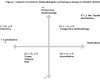
The methodological contribution of Shaikh (2026) is to formulate, more sharply than most of the literature, the choice between an assimilative economics that prices the sacred and a distinctive economics that abandons the analytical, and to argue – on the strength of World Values Survey evidence of broadly shared moral and market attitudes – that the discipline should occupy neither pole but an integrative middle. That diagnosis is sound, and the integrative impulse is the correct one. Its limitation is structural rather than substantive: Shaikh (2026) integrates the scope of analysis while partitioning its method, housing market and beyond-market behaviour under one disciplinary roof but assigning each its own separate toolkit. The result is integration by segregation, a one- dimensional fork resolved by keeping the two domains apart, and the seam shows wherever a single decision carries mixed motives.

Rate this:

Beyond Prohibitions: Unveiling the Hidden Dynamics of Islamic Economics and Finance

Book titled Islamic Finance Principles Practice and Innovation by Dr. Abdullah Al-Hassan with intricate gold and teal Islamic design

This research paper provides a theoretical reframing of the objectives underlying Islamic economics and finance. While Islamic finance is largely known for avoiding specific prohibitions—such as Riba (interest), Gharar (excessive ambiguity), and Maysir (gambling)—critics argue that it has become operationally identical to conventional finance. The author argues against this phenomenon of ‘Shariah arbitrage’, where the outward form is Islamic but the substance remains conventional.

Rate this:

Breaking the Trap of Debt, Inflation, Interest and Poverty

The book by Qanit Khalilullah and Sohaib Umar offers a critique of the modern fractional-reserve banking system, arguing that it is the primary engine behind chronic economic instability, inflation, and wealth inequality. The authors propose a radical macroeconomic transition to a full-reserve banking model. This proposal is specifically tailored as a structural panacea for Pakistan’s crippling debt crisis, while simultaneously being framed as a genuine path to establishing a Shari’ah-compliant Islamic financial system.

Rate this:

Key Highlights of the Global Trade Report

Infographic showing global trade highlights, regional export/import trends, sectoral growth, and future projections.

World merchandise trade grew 4.6% in 2025, beating the 2.4% forecast, as demand for AI-related goods offset tariff uncertainty and policy risks. Asia drove 71% of that growth, supported by resilient emerging-market demand, expansionary policies, and North American frontloading ahead of US “reciprocal” tariffs. Pre-conflict projections had 2026 merchandise trade growth slowing to 1.9% and global GDP at 2.8%. However, the Middle East conflict has curtailed Persian Gulf oil shipments, which account for 20% of global liquid petroleum use, pushing crude to ∼$90/barrel and LNG to ∼$16/MMBtu. If prices stay high, merchandise trade growth may drop to 1.4% and GDP to 2.5% in 2026.

Rate this:

From Ontological to Epistemic–Institutional Halal

Conceptual graphic showing transition from ontological halal focusing on intrinsic nature, divine commands, and raw substances to epistemic-institutional halal involving knowledge, methods, verification, and institutional governance.

Contemporary halal certification represents a fundamental institutional transformation: the shift from an ontological framework in which permissibility is assessed directly against Islamic law to an epistemic-institutional regime in which halal status is constituted through institutional verification. This transformation is a necessary response to the informational conditions of modern economies, but it introduces structural risks—certifier-pay conflicts, interpretive fragmentation, and form-over-substance compliance—that the current institutional framework inadequately addresses.

Rate this: