Category: Articles on Islamic Economics

Articles on Islamic Economics

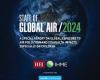
Highlights of State of Global Air Report 2024

The threat of air pollution is not new, but it is changing. Air pollution has contributed to death and disease and has hurt economic prospects and community resilience for decades. During that time, policies and technologies have drastically improved air quality in some areas, saving lives, and proving that pollution is not an inevitable by-product of economic development.
Air pollution is a complex mixture of particles and gases with sources and composition varying over space and time. While hundreds of chemical compounds can be measured in the air, governments typically measure only a small subset as indicators of the different types of air pollution and major sources contributing to that pollution.

Rate this:

Why Nations Fail

Authors argue that some nations are wealthier and more prosperous than others because of their political and economic institutions (e.g. government, market system). Good (inclusive) institutions enable investment and a sense of security in the government and the economic system and so nations prosper, but bad (extractive) institutions do not. Virtuous circles of innovation, expansion and peace are formed from inclusive institutions which form a cycle of increasing prosperity. Prof. Acemoglu and Prof. Robinson argue that exclusionary policies designed to enrich the elites and exploit the poor majority have prevented technological innovation, as the existing elites fought tooth and nail against anything that might endanger their privileges.

Rate this:

Roundup of ICIHES 2024 Johor Bahru, Malaysia

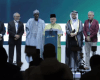
The conference kicked off with address by Deputy Minister of Religion in Malaysia. Dr. Zulkifli highlighted the importance of halal economy and how the current government in Malaysia is committed to provide an enabling environment for halal industry. He highlighted the schemes and initiatives taken to support the halal economy in Johor as well as in Malaysia.

Rate this:

Hujjat Ullah ul Balighah

Shah Waliullah in Hujjat Allah Ul Balighah writes that exchange is of different kinds. Goods for goods or goods for services. There are people with surplus funds and some with deficiency of funds. This requires transfer of resources for need fulfillment without counter value as in Zakat and Sadaqat.

Rate this:

Key Highlights of OIC Mega Trends Report 2024

The report identifies the six inter-related mega trends to impact OIC nations as: Uneven Macroeconomic Performance, Sharing and Platform Economies, Green Economy, Urbanization, Global Supply Chains and Future of Work. The first two look at shifting economies, which are playing out across OIC societies. The next two cover changing environments brought on by climate change and growing populations. The last two consider adapting ecosystems.

Rate this:

Economy of Companions of Prophet Muhammad (Pbuh)

Trade was liked by the Prophet صلى الله عليه وسلم, because it was a means of livelihood based on morality and honesty. He صلى الله عليه وسلم himself was famous in trade and Hazrat Uthman Ghani and Hazrat Abd al-Rahman bin Awf among the Companions (may Allah be pleased with them) were known as useful traders. Hazrat Abd al-Rahman bin Awf remained engaged in trade even after his migration to Medina and achieved great commercial success with his God-given abilities. Hazrat Uthman‟s trading business was so large that his income made him a model of great generosity and he spent his wealth for society.

Rate this:

Significance of Recycling for Environmental Sustainability

Approximately 1.3 billion tons of Municipal Solid Waste (MSW) are generated globally every year and are expected to increase to approximately 2.2 billion tons per year by 2025. In fact, the amount of waste produced per person per day also depends on the economic status of the community concerned. The rates of MSW growth are fastest in Arabian countries and the Middle East.

Rate this: