UN Sustainable Development Goal 12 talks about responsible consumption and production. FAO reports that one-third of the food produced for human consumption is lost or wasted globally, which amounts to about 1.3 billion tonnes per year.
Articles on Islamic Economics
UN Sustainable Development Goal 12 talks about responsible consumption and production. FAO reports that one-third of the food produced for human consumption is lost or wasted globally, which amounts to about 1.3 billion tonnes per year.
The annual global Multidimensional Poverty Index (MPI), jointly published by the Human Development Report Office (HDRO) of the United Nations Development Program and the Oxford Poverty and Human Development Initiative (OPHI) at the University of Oxford since 2010, measures interlinked deprivations in health, education and standard of living that directly affect a person’s life and wellbeing. Breakdown by component indicator shows what deprivations poor people experience, which can guide the choice of poverty reduction interventions to achieve the greatest impact.
Experts urge adopting Islamic Economics to meet Sustainable Development Goals at Ist Islamic Economics and Development Conference at Quaid e Azam University Islamabad on December 7, 2023.
This paper provides reflection on Islamic economics and rightly concludes that a lot of work needs to be done in providing distinct story of why financial and economic crises happen and what Islamic economics can offer through its principles, values, instruments and markets.
Because of mere fate, a lot of people in the world, including Pakistan, have ended up in a position where they bear the torment of heat without much to do about it. They can not operate air-conditioners even when the temperature flares up and beyond the 35℃. Many do not even have one. “A man has only a certain capacity for battling with fate’, said Wodehouse. Well! this capacity is amazingly high in some people. But, there is still a long waiting period.
Contemporary economics considers rationality only in the context of this world without any regard to the life after death. Nonetheless, more than 90% of the people in the world are associated with any of the different religions and in most divine religions, there is concept of afterlife. The common definition of rationality would not describe their behavior as rational. This would be a violation of the basic assumption that economic agents are rational.
How Religion Becomes Important for Economics? This question can be answered through four postulates which summarize how religion and economics come across each other.
The third International Divine Economics Conference, organized by the Islamic Social Sciences Forum (ISF) of Hadi Foundation in collaboration with esteemed universities and AJK Medical College, commenced with great enthusiasm in the month of May, 2023 in capital city of AJK, Muzaffarabad.
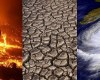
Human behaviour, consumption and business activities have been identified as the main cause of the climate crisis the earth is facing at present, having seriously detrimental effects on the earth’s bio capacity to sustain life. These effects, referred to as anthropogenic impacts, are causing degradation of the globally shared public resource known as natural capital.
This paper discusses the application of Maqasid-e-Shari’ah in Islamic finance discourses and attempts to clarify some misconceptions. The paper also recommends formulating a framework of actualizing Maqasid-e-Shari’ah in Islamic finance.