
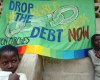
Most developing countries are going through a perpetual debt trap which takes away resources that could have been used on development, but instead are used to service compounded debt.


Articles on Islamic Economics
Most developing countries are going through a perpetual debt trap which takes away resources that could have been used on development, but instead are used to service compounded debt.
“The term riba encompasses interest in all its manifestations irrespective of whether it relates to loans for consumption purposes or for productive purposes, whether the loans are of a personal nature or of a commercial type, whether the borrower is a government, a private individual or a concern, and whether the rate of interest is low or high” (Council’s Report, 1980).
As per Islamic principles, within certain bounds, the market forces can operate and will determine which goods should be produced and offered at what price. The major difference from capitalistic system is that rather than having a fixed compensation, the capital will only earn a share in actual profit/loss out of the production process in which it is used.

A market in which there are many producers serving differentiable products is known as monopolistic competition. In this market type, often producers adopt certain marketing strategies and execute marketing plans to increase their product’s appeal, demand and hence increase the sales and thereby profits. It also helps them to create brand loyalty for their products. From an Islamic perspective, there are certain principles and broad guidelines that must be followed and taken care of while advertising the products.

In a capitalistic democracy, the elite class is able to expend on political campaigns and hence take part in politics and where crony capitalism results in business and political class combining to pursue their self interest.

The idea of material progress and well being enabling the people to forget fear and religion and Question of ‘why we exist’, has failed. Ignoring the purpose of existence and trying to replace it with material self pursuit does not and has not solved the fundamental human quest of ‘why we exist’.

Salman Ahmed Shaikh Capitalism, the way it is practiced as an economic system, has largely allowed and provided legal cover to certain exploitative institutions and their operations based on free market philosophy. […]

Rather than complimenting humans in their animalistic instincts to keep having one-eyed focus on material well-being only, Islam inculcates piousness, kindness, cooperation and communal responsibility in humans. In some instances, Islam guides explicitly to avoid extravagance, lavishness and using certain products and services which harm a human’s ethical existence and well being either individually and/or harm the society in the process.

Islmic economic framework does not argue for a state-led or state-run economy. In fact, Islamic economic principles are very much open and favorable towards market based economy. By enabling market economy to run competitively, an Islamic economy provides market based solutions to employment creation and improvement in living standards through effective and efficient utilization of resources.

Islamic inheritance laws in Islamic economic framework have the potential to permanently and systematically reduce the concentration of wealth in every generation at the most micro level possible.
 Islamic Economics Project