Tag: EconomicJustice

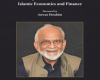
The Late Dr. Muhammad Umar Chapra

Dr. Muhammad Umar Chapra (February 1, 1933 – June 13, 2026) was a prominent economist, researcher, professor, and intellectual. During his student days, he was associated with Islami Jamiat-e-Talaba Karachi, and thereafter, throughout his life, he remained actively engaged in the field of knowledge and scholarship as a servant of Islam. As an author of numerous scholarly books and a creative thinker in Islamic economics, he left an indelible mark.
Rate this:

Muhammad Nejatullah Siddiqi

The book discusses the vast contributions of Dr. Muhammad Nejatullah Siddiqi in disciplines like economics, finance, Islamization, Maqasid-e-Shar’iah and contemporary socio-political and economic issues. As one of the chief contributors in Islamic economics, Dr. Nejatullah Siddiqi firmly believed that Islamization, or the acquisition of knowledge, should not be pursued for the sake of gaining power and authority. Instead, the creation, acquisition, and utilization of knowledge are fundamentally intended for the betterment of humanity. Its goal is not the universal domination of Muslims, but rather the overall welfare of humanity as a whole.

Rate this:

Islam and the Economic Challenge  

In his exhaustive deconstruction of capitalism, Chapra exposes what he terms the limits of capitalism and the logical flaws inherent in its foundational architecture. He explores the historical genesis of the market system, tracing its roots back to the Enlightenment worldview, which systematically unseated Christian scholastic moral constraints in favour of secularism, utilitarianism, and social Darwinism. The reason behind capitalism’s failure to actualize the socially-desired goals is the conflict between the goals of society and the worldview and strategy of capitalism. The goals were humanitarian, based on a moral foundation; the worldview and the strategy were social Darwinist.

Rate this:

Integrative Methodology of Islamic Economics: A Note

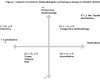
The methodological contribution of Shaikh (2026) is to formulate, more sharply than most of the literature, the choice between an assimilative economics that prices the sacred and a distinctive economics that abandons the analytical, and to argue – on the strength of World Values Survey evidence of broadly shared moral and market attitudes – that the discipline should occupy neither pole but an integrative middle. That diagnosis is sound, and the integrative impulse is the correct one. Its limitation is structural rather than substantive: Shaikh (2026) integrates the scope of analysis while partitioning its method, housing market and beyond-market behaviour under one disciplinary roof but assigning each its own separate toolkit. The result is integration by segregation, a one- dimensional fork resolved by keeping the two domains apart, and the seam shows wherever a single decision carries mixed motives.

Rate this:

Islamic Economics and Economics as a System of Power

The paper begins by addressing the post-colonial emergence of Islamic economics, which sought to establish an independent discourse based on interest-free commerce, moral behavioral norms eschewing self-interest, and the pursuit of social justice. Despite these ideal goals, the field has faced severe criticisms from scholars such as Prof. Timur Kuran, Prof. Akram Khan, and Prof. Syed Tahir for failing to develop a unique value set, an original methodology, or the analytical power necessary to solve modern economic problems.

Rate this:

Iqtisaduna (Our economics)

The book begins with an incisive academic criticism of dialectical materialism, the philosophical backbone of Marxist thought. Al-Sadr argues that history is an incredibly complex phenomenon that cannot be reduced to a single driving force, such as the economic factor or the means of production. He asserts that various other elements, including religious convictions, political structures, and social dynamics, play primary and often independent roles in shaping human destiny. He challenges the foundational logic of materialism by pointing out that it cannot explain the “first push” of the universe or human development without acknowledging a non-material or Divine cause. For al-Sadr, the materialist view is a narrow lens that fails to capture the multidimensional nature of human existence.

Rate this:

Zakah Driven Islamic Economy and Interest Driven Capitalism

Entrepreneurs may have less or more capital than they plan to invest. Owners of surplus capital may withhold it or may make it available to investors. This may be based on profit sharing ratio or interest. In the Islamic system, charge of Zakah assisted by expected share in profit motivates the owners of capital to get it invested while in a capitalist system, interest motivates the capitalist creditors to lend capital for earning interest.

Rate this:

Behavioural and Islamic Economics Critique on Mainstream Views on Unemployment: A Joint Perspective

Mainstream economic policies often prioritize short-term goals, such as inflation control and GDP growth, over addressing the root causes of unemployment. This short-sighted approach can lead to unemployment persistence, even during periods of apparent economic growth. By contrast, behavioural economics urges policymakers to adopt long-term and holistic strategies that prioritize social welfare and sustainable job creation, offering a more nuanced and comprehensive perspective on addressing unemployment.

Rate this: