Tag: Islamic Banking

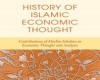
History of Islamic Economic Thought

Prof. Islahi argues that Muslim scholars made substantial contributions to economic thought, influencing both the development of Islamic economics and, indirectly, the foundations of modern Western economic theory. He challenges the notion that modern economics is solely a product of Western thought, highlighting the intellectual debt owed to earlier Muslim thinkers.


Rate this:

Islamic Finance and Inclusive Economic Growth

In a market following Islamic norms and values, the market forces will determine which Halal goods and services should be produced and offered at what price. Through private sector investment and production, resource markets and product markets will function to enable households to obtain purchasing power by providing rentable factors of production like labour services (Ijarat-ul-Ashkhas) or usufruct of a naturally existing or produced tangible asset (Ijarat-ul-A’yan) in the production process and earn compensation in terms of wage and rent, respectively.

Rate this:

Key Highlights of IFSB Report 2024

Islamic banking continues to be the largest segment of the IFSI, constituting 70.21% of the total global IFSI assets in 2023, while Sukuk outstanding and Islamic funds collectively represented 29.08%, and the Islamic insurance segment represented 0.71%. The regional distribution of global Islamic finance assets reveals a pronounced concentration in the Gulf Cooperation Council (GCC), which accounts for 52.50%.

Rate this:

Examining the Adoptability of Crypto currency in the Islamic Financial System: Perspectives from Shariah Scholars

Majority of scholars hold a view that a currency‟s permissibility is not invalidated if its value diminishes. This perspective is founded on the premise that conventional forms of currency are also subject to fluctuations in value. Financial securities like Halal stocks also go through swings in prices due to market and economic factors.

Rate this:

Does PLS in Islamic banking limit excessive money creation?

Authors thinks that PLS offers a valuable resolution for banking system money creation through the optimization of Islamic bank financing by facilitating the separation of the monetary function from the credit one. This reform thought reinforces the stability value of money allowing it to fully perform its functions with reference to the directives of Sharia. This especially allows the integrity and purchasing power of money, the reduction of the gap between the evolution of both real and financial economies and, consequently, the indebtedness and crisis. Authors recommend to promote PLS financing by reforming institutional and regulatory constraints.

Rate this:

Is Conventional Mortgage Halal

Conventional banks only provide loans no matter whether the loan amount is used for purchasing assets or not. As far as repayment of debt is considered in conventional finance lease or mortgage loans, the interest is due from the very first date of sanction of loan till the very last. If the asset remains unusable during the conventional finance lease, the instalments including interest and principal repayment will continue without any break. If interest amount is not paid on time, then interest has to be paid on accrued interest along with financial penalties. Compounded interest can multiply exponentially.

Rate this: