
Use of mathematics in economic theorizing has restricted economic analysis of consumer behavior within a confined boundary of certain axioms. Often, these axioms are found to be empirically false.


Articles on Islamic Economics
Use of mathematics in economic theorizing has restricted economic analysis of consumer behavior within a confined boundary of certain axioms. Often, these axioms are found to be empirically false.

The authors caution that democratic politics may or may not help fix dynamic social problems. The authors argue that even in their own optimistic model of politics—where parties maximize average utility of those currently alive— equilibrium policies may not put society on the right path, and the speed of the green transition may be too slow. Climate change and environmental degradation is a slow and cumulative process. To protect environment, the efforts also need to be cumulative and consistent. A self-centric secular worldview encourages the self-centric use of private property resources. However, even small things done collectively and consistently can have a larger effect.

The author urges responsible attitude towards ―limits to growth‖. The author argues for the equalization of endowments rather than expansion of policies that redistribute current income. Kate Raworth then lists seven ways of thinking about the economy that will help us manage common needs such as water, food, income – the things in the hole of the doughnut – so that humanity lands in the sweet spot rather than drifting past the outer ring – the ecological ceiling — where phenomena like ozone layer depletion thrives.
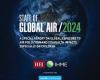
The threat of air pollution is not new, but it is changing. Air pollution has contributed to death and disease and has hurt economic prospects and community resilience for decades. During that time, policies and technologies have drastically improved air quality in some areas, saving lives, and proving that pollution is not an inevitable by-product of economic development.
Air pollution is a complex mixture of particles and gases with sources and composition varying over space and time. While hundreds of chemical compounds can be measured in the air, governments typically measure only a small subset as indicators of the different types of air pollution and major sources contributing to that pollution.
To fully address climate-related financial risks and promote sustainability, banks must balance their protective and proactive roles. While protecting assets from climate risks remains critical, it should not overshadow the need for a broader responsibility. Banks are uniquely positioned to be powerful agents of change, and by integrating sustainability into their operations and business strategies, they can contribute significantly to the global effort to combat climate change and foster sustainable development.

Authors argue that some nations are wealthier and more prosperous than others because of their political and economic institutions (e.g. government, market system). Good (inclusive) institutions enable investment and a sense of security in the government and the economic system and so nations prosper, but bad (extractive) institutions do not. Virtuous circles of innovation, expansion and peace are formed from inclusive institutions which form a cycle of increasing prosperity. Prof. Acemoglu and Prof. Robinson argue that exclusionary policies designed to enrich the elites and exploit the poor majority have prevented technological innovation, as the existing elites fought tooth and nail against anything that might endanger their privileges.
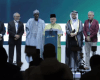
The forum emphasized on integrating Zakat and Waqf in a way that transforms lives and strengthens communities. There is need for collective vision encompassing the individual, the family, and the wider social order, fostering a comprehensive approach to socioeconomic development.

The conference kicked off with address by Deputy Minister of Religion in Malaysia. Dr. Zulkifli highlighted the importance of halal economy and how the current government in Malaysia is committed to provide an enabling environment for halal industry. He highlighted the schemes and initiatives taken to support the halal economy in Johor as well as in Malaysia.

Shah Waliullah in Hujjat Allah Ul Balighah writes that exchange is of different kinds. Goods for goods or goods for services. There are people with surplus funds and some with deficiency of funds. This requires transfer of resources for need fulfillment without counter value as in Zakat and Sadaqat.

The report identifies the six inter-related mega trends to impact OIC nations as: Uneven Macroeconomic Performance, Sharing and Platform Economies, Green Economy, Urbanization, Global Supply Chains and Future of Work. The first two look at shifting economies, which are playing out across OIC societies. The next two cover changing environments brought on by climate change and growing populations. The last two consider adapting ecosystems.
 Islamic Economics Project