
Tag: PovertyAlleviation

Entrepreneurship from an Islamic Perspective

Four colleagues discuss plans beside a whiteboard reading “Tijarah (Trade) with Integrity” and “Maqasid al-Shariah.”

The paper outlines twelve foundational Islamic ethical principles and economic controls governing commercial conduct. These include Tawhid (monotheism and ultimate divine accountability), Sidq (honesty in financial reporting and marketing), Amanah (trustworthiness in handling stakeholder resources), Adl and Qist (justice and equity in pricing and employee compensation), Al-Ihsan (striving for excellence and benevolence), Taqwa (God-consciousness), Al-Maslahah Al-Ammah (prioritizing public interest), Al-Ayid Al-Halal (earning only through permissible means), and general social responsibility.
Rate this:

Integrative Methodology of Islamic Economics: A Note

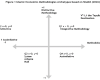
The methodological contribution of Shaikh (2026) is to formulate, more sharply than most of the literature, the choice between an assimilative economics that prices the sacred and a distinctive economics that abandons the analytical, and to argue – on the strength of World Values Survey evidence of broadly shared moral and market attitudes – that the discipline should occupy neither pole but an integrative middle. That diagnosis is sound, and the integrative impulse is the correct one. Its limitation is structural rather than substantive: Shaikh (2026) integrates the scope of analysis while partitioning its method, housing market and beyond-market behaviour under one disciplinary roof but assigning each its own separate toolkit. The result is integration by segregation, a one- dimensional fork resolved by keeping the two domains apart, and the seam shows wherever a single decision carries mixed motives.

Rate this: