Tag: MaqasidAlShariah

Islam and the Economic Challenge  

In his exhaustive deconstruction of capitalism, Chapra exposes what he terms the limits of capitalism and the logical flaws inherent in its foundational architecture. He explores the historical genesis of the market system, tracing its roots back to the Enlightenment worldview, which systematically unseated Christian scholastic moral constraints in favour of secularism, utilitarianism, and social Darwinism. The reason behind capitalism’s failure to actualize the socially-desired goals is the conflict between the goals of society and the worldview and strategy of capitalism. The goals were humanitarian, based on a moral foundation; the worldview and the strategy were social Darwinist.

Rate this:

Remembering Dr. Umer Chapra

Dr. Umer Chapra was born on February 1, 1933, in Bombay, British India. Chapra’s family moved to Karachi following the 1947 partition. Despite early financial hardships after his father passed away when Chapra was only six, his mother prioritized his education. This investment paved the way for an extraordinary academic trajectory. He attended the University of Karachi, topping his class to earn a Bachelor of Commerce (B. Com) in 1954, followed by a Master of Commerce (M. Com) in 1956. In 1950, out of 25,000 students who sat for the high school leaving examinations in Karachi, Chapra topped the list, earning the prestigious Model Student title.

Rate this:

Integrative Methodology of Islamic Economics: A Note

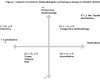
The methodological contribution of Shaikh (2026) is to formulate, more sharply than most of the literature, the choice between an assimilative economics that prices the sacred and a distinctive economics that abandons the analytical, and to argue – on the strength of World Values Survey evidence of broadly shared moral and market attitudes – that the discipline should occupy neither pole but an integrative middle. That diagnosis is sound, and the integrative impulse is the correct one. Its limitation is structural rather than substantive: Shaikh (2026) integrates the scope of analysis while partitioning its method, housing market and beyond-market behaviour under one disciplinary roof but assigning each its own separate toolkit. The result is integration by segregation, a one- dimensional fork resolved by keeping the two domains apart, and the seam shows wherever a single decision carries mixed motives.

Rate this:

From Ontological to Epistemic–Institutional Halal

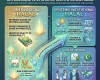
Conceptual graphic showing transition from ontological halal focusing on intrinsic nature, divine commands, and raw substances to epistemic-institutional halal involving knowledge, methods, verification, and institutional governance.

Contemporary halal certification represents a fundamental institutional transformation: the shift from an ontological framework in which permissibility is assessed directly against Islamic law to an epistemic-institutional regime in which halal status is constituted through institutional verification. This transformation is a necessary response to the informational conditions of modern economies, but it introduces structural risks—certifier-pay conflicts, interpretive fragmentation, and form-over-substance compliance—that the current institutional framework inadequately addresses.

Rate this:

A Critical Survey of Islamization of Knowledge

The book is a succinct summary of the major thoughts in Islamization of knowledge and the noted author provides a clear demonstration of ideas and how they contrast with each other. An equally useful contribution of the book is the illustration of the different views in flowchart diagram to ease understanding through illustrations. Finally, the book also contains abstracts of seminal works together with a useful and relevant bibliography for interested readers.

Rate this:

Measuring What Truly Matters: A Maqasid al Shariah Approach to Reforming Gross Domestic Product

When economic policy is guided solely by GDP, these ethical imperatives may be undermined. For example, a country may pursue industrial expansion that increases GDP but harms public health, violating hifz al nafs. Liberalization of entertainment sectors may boost GDP but erode moral and family values, violating hifz al din and hifz al nasl. Financial expansion through interest-based lending may raise GDP but undermine fairness and risk sharing, violating hifz al mal.

Rate this:

The Role of Integrated Value Mediation in ESG Frameworks: Transforming Circular Agriculture within an Islamic Economic Context

The global momentum behind sustainable development has elevated ESG principles to a central position in both corporate and public sector strategies. The Global Sustainable Investment Review (2020) reports that assets managed under sustainable investment strategies reached USD 35.3 trillion, representing over one-third of total professionally managed assets worldwide. Despite this impressive shift, the practical implementation of ESG is beset by challenges, with the agricultural sector particularly affected due to its central role in food security, economic development, and environmental stewardship. Conflicts over land rights, water resources, environmental impacts, and social inequalities are common and often impede progress toward sustainability and inclusivity.

Rate this:

Islamic Worldview and Sustainable Development: Limits of Legal Compliance and the Need for Ethics

Sustainable development in an Islamic economy is unattainable without the integration of ethics. To stay relevant, it is essential to broaden the interpretation of Shariah compliance beyond mere legal requirements, incorporating maqasid and qawaid to foster positive social and environmental outcomes. Islamic economics and finance are designed to benefit all humanity, not just Muslims, and achieving “Rahmatil alamin” (mercy to all) requires ethics to be deeply embedded in the economy. However, this can only be realized by transforming the mind-set of economic agents from “homo Islamic-legalus” to “homo Islamic-ethicus,” who prioritize ethical decision-making.

Rate this:

Reinstating the Family in ESG: A Tawhidic and Maqasidic Recalibration of Global Governance Frameworks

The omission of the family from ESG frameworks is not a minor oversight—it is symptomatic of a deeper malaise within secular ethics and governance. As Professor Nejatullah Siddiqi once noted, “The preservation of family is not a cultural preference—it is a civilizational necessity.” The Mf-ESG model, with its Tawhidic, Maqasidic, and civilizational foundations, offers a corrective to the ESG paradigm’s moral myopia. It presents a model of sustainability not limited to compliance and metrics but inspired by meaning, purpose, and transcendence.

This model deserves further exploration and institutional support through high-level scholarly forums, international think tanks, policy summits, and academic curricula. It bridges theory and practice, faith and governance, offering not only a critique but a constructive framework for a just and flourishing civilization.

Rate this: